Proudly serving Phoenix, Scottsdale, Mesa, Chandler, Tempe, Glendale & surrounding areasCall or Text 24/7: 602-507-8393
Aerial view of a residential neighborhood with desert landscaping and Saguaro cacti in Phoenix, AZ during golden hour.

Cabinet Painting, Refinishing and Custom Wood Staining in Phoenix, AZ

Phoenix Painter Co. provides cabinet painting and refinishing for residential and commercial properties throughout Phoenix and the Maricopa County metro area. We paint kitchen cabinets, restore natural wood with stain and topcoat, repair damaged surfaces, and finish custom two-tone or color-matched designs. Our cabinet work also supports HOA and apartment or multifamily projects when multiple units need coordinated updates. Every project begins with an on-site assessment and a written scope before work starts.

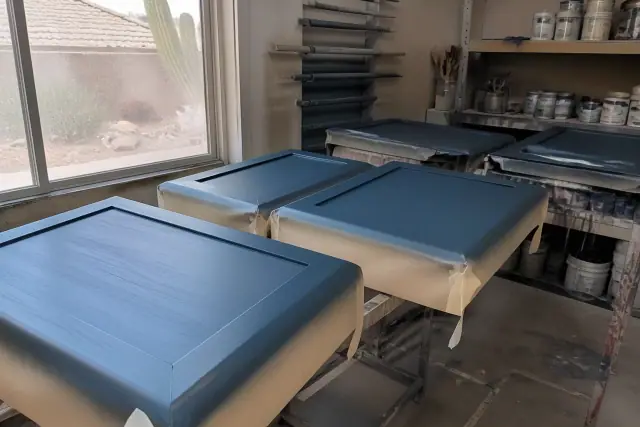
Desert dust, prolonged UV exposure through west-facing windows, kitchen grease, and Phoenix's low humidity can undermine a finish when preparation or cure timing is rushed. We remove doors and drawer fronts, degrease the surfaces, prepare the substrate, and match the primer to materials such as melamine, thermofoil, lacquer, MDF, or hardwood. Doors and drawers are sprayed in a controlled, dust-free station while cabinet boxes are masked and finished in place. The result is a smooth, durable coating system built for daily wear.

Our crews follow Master Painters Institute finish standards, hold current Arizona Registrar of Contractors licensing, and are certified under the EPA Lead-Safe Renovation, Repair and Painting Rule for homes built before 1978.

Phoenix Painter Co. provides cabinet painting and refinishing across Phoenix, Scottsdale, Tempe, Mesa, Chandler, Glendale, and the surrounding Maricopa County metro area.

★ ★ ★ ★ ★4.9/5.0 Customer Rating · 28 Years of Painting Experience · Thousands of Projects Completed · Licensed, Bonded & Insured · Serving Homes, Businesses & HOAs

Phoenix Cabinet Painting & Refinishing

What Does Cabinet Painting Involve?

Cabinet painting is a multi-step refinishing process, not a quick coat over an existing finish. Correct preparation creates a sound bond between the cabinet substrate, primer, and durable topcoat.

Doors, drawer fronts, and hardware are removed before every surface is degreased and scuff-sanded. Cabinet boxes stay in place under careful masking, while doors and drawers move to a controlled spray station for a smooth, dust-free finish.

Painting is usually the better route for dated finishes, mismatched wood tones, or repaired damage. Refinishing with stain and a fresh topcoat is better suited to sound oak, maple, or alder when preserving the natural grain is the goal.

Benefits of Professional Cabinet Refinishing

A well-planned cabinet update can preserve sound boxes, change the look of the entire kitchen, and avoid the disruption of full replacement. The best approach depends on the existing construction, finish condition, household use, and desired appearance.

  • Keep structurally sound wood or plywood boxes that may still perform well after fifteen or twenty years
  • Avoid demolition, countertop removal and reinstallation, and the weeks-long displacement of a full remodel
  • Choose a catalyzed enamel or waterborne alkyd finish made to handle daily cabinet wear
  • Create a high-impact kitchen transformation without replacement that can run into tens of thousands of dollars
  • Preserve attractive natural grain through careful stripping, staining, and topcoating
  • Unify mismatched wood tones and repaired areas with an even painted finish
  • Keep usable cabinet boxes out of the landfill
  • Phase commercial or multifamily work across units or floors to limit downtime
Cabinet Services

Cabinet Painting & Refinishing Services

Phoenix Painter Co. tailors the scope to the cabinet material, existing finish, damage, design goal, and property type. Services range from a focused door-and-drawer refresh to full painted or stained kitchens and coordinated commercial projects.

Kitchen Cabinet Painting

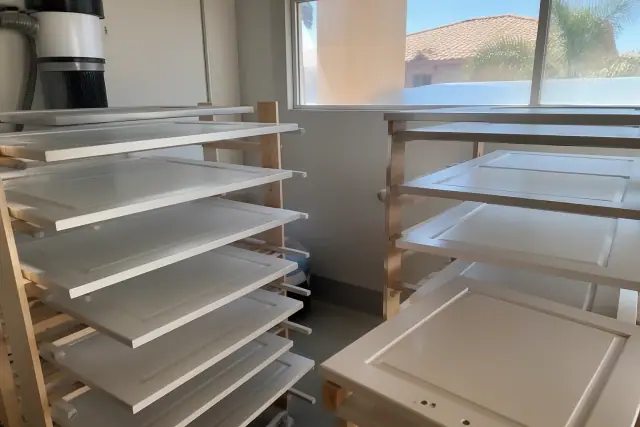
Dismantled kitchen cabinet doors drying on racks in a workshop in Phoenix, AZ.

We degrease, sand, prime, and finish kitchen cabinet boxes, doors, and drawer fronts for a smooth, uniform appearance. Semi-gloss, satin, and matte options let the sheen match household traffic and cleaning habits.

Request Estimate

Cabinet Refinishing and Staining

Cabinet doors drying on racks in a Phoenix, AZ workshop during a kitchen refinishing project.

For quality oak, maple, or alder, we can strip a failing clear finish, prepare the bare wood, apply a new stain, and protect it with a fresh topcoat. This route keeps the natural grain visible instead of covering it with a solid color.

Request Estimate

Cabinet Restoration and Damage Repair

Dismantled cabinet doors on drying racks with wood filler repairs in a Phoenix, AZ workshop.

Before finishing, we address chips, gouges, swollen MDF, delaminated veneer, and water damage around sink bases, dishwashers, and refrigerator lines. Wood filler or epoxy consolidant helps stabilize repaired areas so defects do not telegraph through the coating.

Request Estimate

Custom and Two-Tone Cabinet Finishes

Cabinet doors on drying racks during a painting project in a workshop in Phoenix, AZ.

Custom options include two-tone kitchens, glazed accents, and color-matched island cabinetry coordinated with new countertops or flooring. We help balance the island and perimeter colors with the existing kitchen rather than treating each surface in isolation.

Request Estimate

Commercial and Multifamily Cabinet Painting

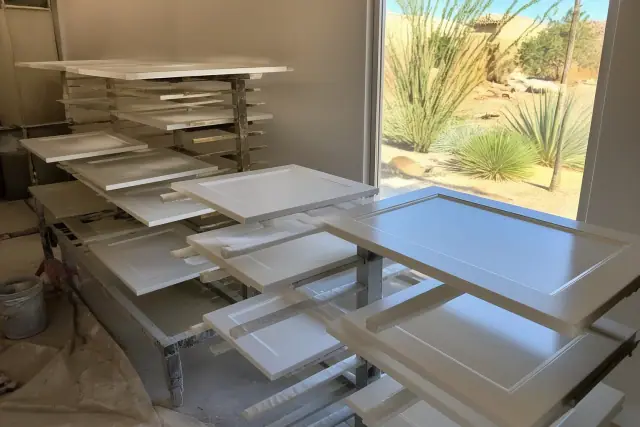
Cabinet doors on drying racks during a painting project in a Phoenix, AZ workshop with desert views.

We paint cabinets in offices, medical facilities, apartment properties, and HOA communities across the Phoenix metro area. Work can be phased across several units, common areas, or floors to reduce disruption for tenants and business operations.

Request Estimate

Door and Drawer-Front Refresh

Dismantled kitchen cabinet doors drying on racks during a cabinet refinishing project in Phoenix, AZ.

Painting only the doors and drawer fronts while leaving less-visible boxes in their existing finish can reduce labor when a full refinish is not needed. We confirm that the retained and refreshed surfaces will work together before setting that scope.

Request Estimate
Finish and Design Choices

Cabinet Finish & Color Options

Cabinet materials and goals call for different preparation, coating, and design choices. These options help us match the finish system to daily use, preserve natural wood when appropriate, and control the scope of the update.

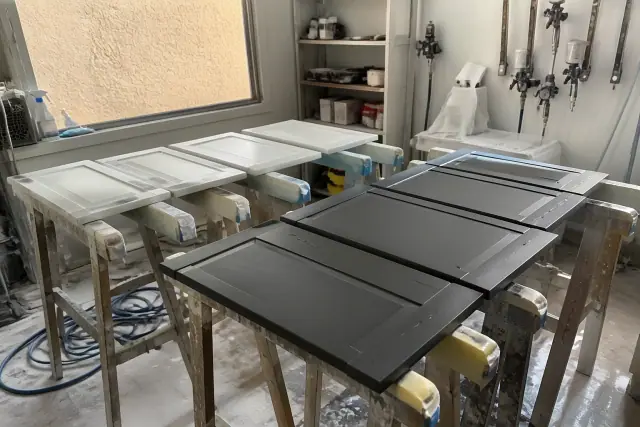
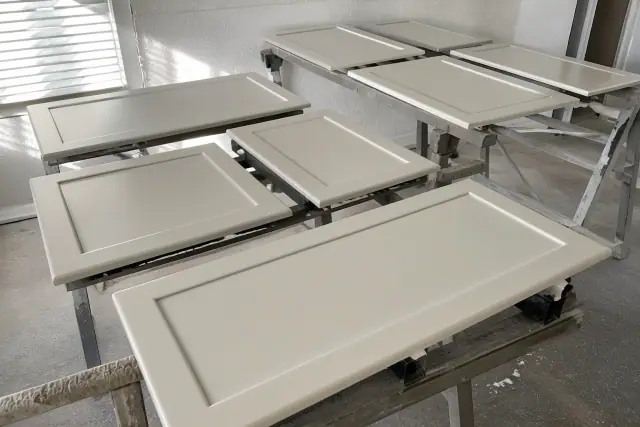
Dismantled cabinet doors with smooth enamel finish drying in a Phoenix, AZ workshop.

Painted Enamel Finishes

Catalyzed enamel and waterborne alkyd topcoats create the durable, cleanable surface active kitchens need. Choosing the stronger system up front can avoid paying for another refinish in three or four years.

  • Catalyzed enamel rated for daily cabinet wear
  • Waterborne alkyd topcoat for a smooth painted surface
  • Semi-gloss for the most durability in grease-prone kitchen zones
  • Satin for a balanced sheen and everyday appearance
  • Matte for homeowners who prefer a lower-reflection finish
Request Estimate
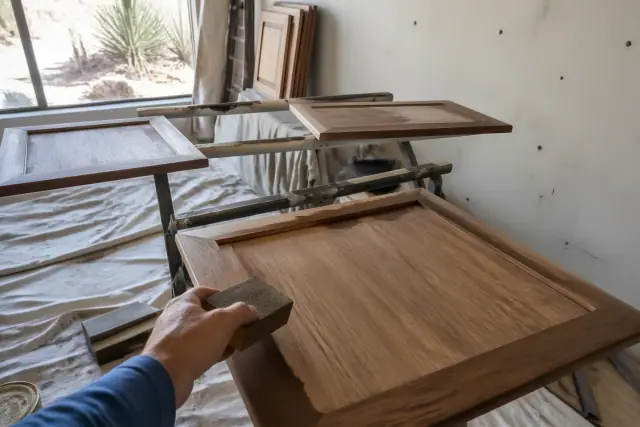
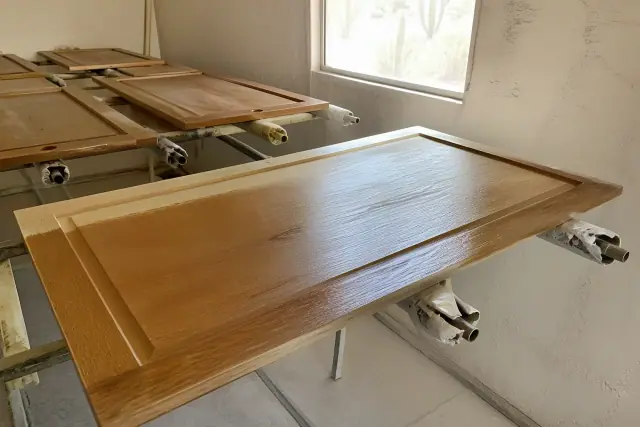
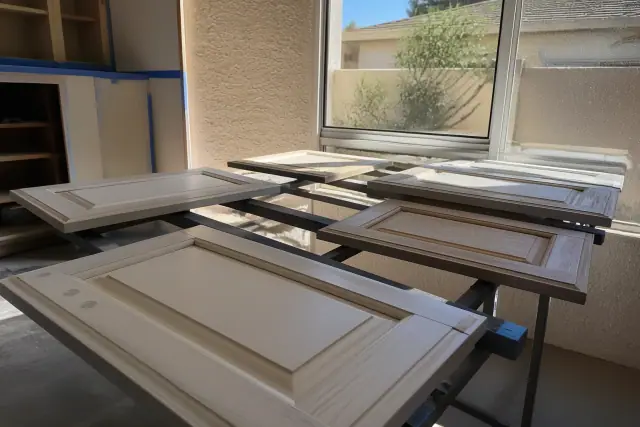
Cabinet door being stained and topcoated in a Phoenix, AZ workshop with sunlight and stucco walls.

Natural-Wood Stain and Topcoat

Staining is best suited to sound oak, maple, or alder when the homeowner wants to keep the grain visible. The old finish must come off cleanly so the new stain and protective topcoat can develop an even appearance.

  • Citrus-based stripping for failing lacquer or varnish
  • Careful bare-wood preparation that preserves visible grain
  • Stain selection matched to the wood and desired tone
  • Fresh topcoat to protect the refinished surface
  • Paint instead of stain when repairs or mismatched tones need a uniform result
Request Estimate
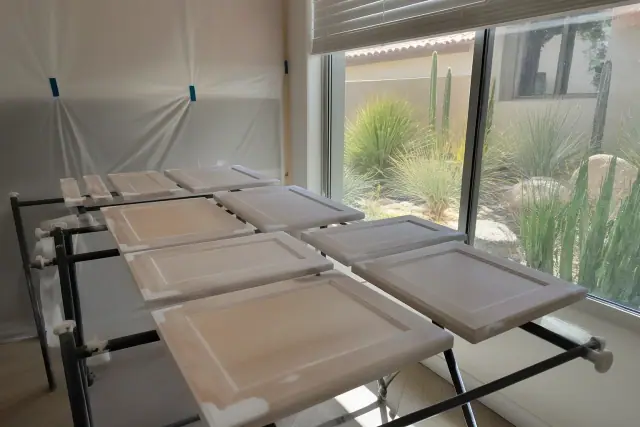
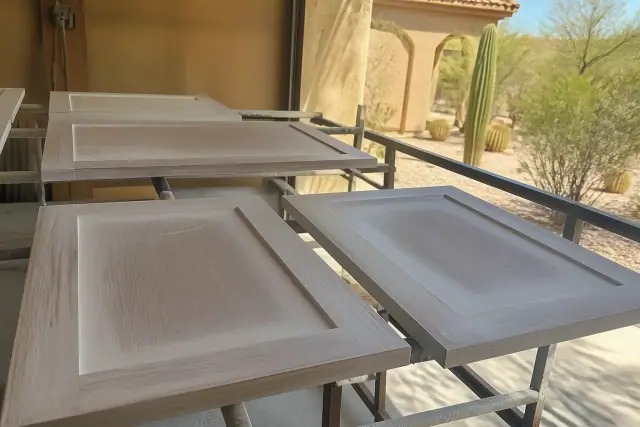
Cabinet doors with primer on drying racks at a workshop in Phoenix, AZ.

Substrate-Specific Priming

We test adhesion on an inconspicuous panel and select a bonding primer for the actual cabinet-grade surface. Standard wall primer is not a substitute on slick or previously coated substrates.

  • Bonding primer formulated for melamine
  • Preparation suited to thermofoil surfaces
  • Adhesion testing over existing lacquer
  • Repair and sanding for swollen MDF
  • Wood filler or epoxy for chips and delaminated veneer
Request Estimate
Paint cans and masked kitchen cabinets in a Phoenix, AZ workshop during a refinishing project.

Custom Color and Design

Dated 1990s oak in Ahwatukee and Arcadia kitchens can take on a clean, modern appearance through a carefully prepared painted finish. Color and design choices can also coordinate an island with countertops, flooring, and the perimeter cabinetry.

  • Warm, earthy neutrals for desert-adjacent palettes
  • Deep charcoal and espresso tones
  • Two-tone kitchens with a contrasting island
  • Glazed accents for added cabinet detail
  • Color-matched island cabinetry for a coordinated remodel
Request Estimate
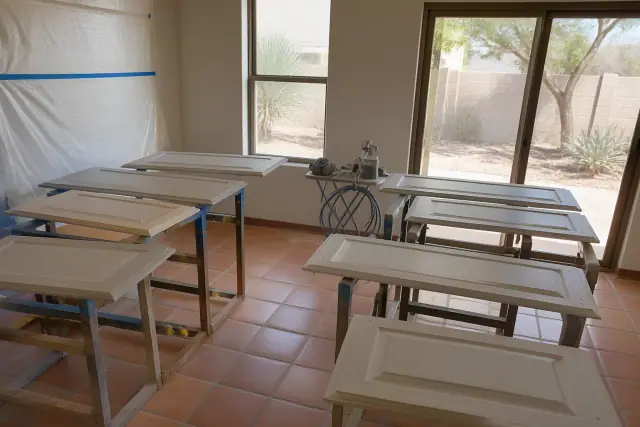
Cabinet doors drying on racks in a kitchen workspace during a painting project in Phoenix, AZ.

Flexible Project Scopes

Scope can range from a single water-damaged cabinet box to a full kitchen or coordinated work across dozens of units. The assessment identifies which surfaces need full preparation and which can remain in place.

  • Standard kitchens with 20 to 30 doors and drawers
  • Doors and drawer fronts only when boxes do not need refinishing
  • Cabinet boxes masked and finished in place
  • Focused repair for a water-damaged cabinet box
  • Phased work across multiple units or floors
Request Estimate
Choosing Paint or Stain

Choosing the Right Cabinet Approach

Painting is a strong fit when the goal is a solid color, concealed repairs, or unified mismatched wood tones. Staining is better when the cabinets are quality hardwood, structurally sound, and worth preserving for their natural grain.

Cabinet Assessment and Written Scope

We examine the wood species, hinge type, existing finish, adhesion, and any structural or water damage before recommending paint or stain. The written scope defines preparation level, sheen, and color before any deposit changes hands.

Licensed and Lead-Safe Preparation

Our crews follow Master Painters Institute finish standards and hold current Arizona Registrar of Contractors licensing. EPA Lead-Safe Renovation, Repair and Painting certification guides work where painted surfaces may be present in Phoenix homes built before 1978.

Phoenix-Aware Finish Control

Low humidity can accelerate cure times and cause premature drying, while desert dust can settle into an exposed coating. Controlled spray conditions, tack-clothing, and planned dry times help protect the finish at each stage.

Preparation That Lasts

Cabinet Problems We Prepare to Solve

Durable cabinet results begin by identifying what can interfere with adhesion or show through the final finish. We address contamination, substrate damage, failing coatings, and cure conditions before relying on primer and topcoat.

Request an Assessment

Grease-Saturated Surfaces

Grease near the range can block primer adhesion even when a cabinet looks clean. TSP-based degreasing removes the residue before sanding and coating begin.

Sonoran Desert Dust

Fine dust can settle into wet primer or topcoat and leave a rough surface. Doors and drawer fronts move to a controlled spray station, and prepared surfaces are tack-clothed before primer.

Low-Humidity Cure Problems

Phoenix's arid air can make a coating dry prematurely when preparation and timing are rushed. Planned dry times between coats help the system cure instead of merely feeling dry at the surface.

Water Damage and Swollen Panels

Leaks near sinks, dishwashers, and refrigerator water lines can swell MDF or damage veneer. Those areas need repair, filling, and sanding before paint can create an even, stable finish.

Failing Lacquer and Delamination

Peeling lacquer, varnish that will not hold new product, and delaminated veneer cannot simply be covered. We strip the failing finish when needed and stabilize damaged areas before priming.

Brush Marks and Chipping

Brush-and-roll paint over unprimed melamine can show heavy marks, chip at corners within months, or lose adhesion within a year or two. Correct degreasing, bonding primer, controlled dry times, and spray application address those failure points.

How It Works

Our Cabinet Refinishing Process

The process moves from inspection and scope to careful disassembly, cleaning, repair, surface preparation, coating, and final adjustment. Each stage protects the bond and appearance of the next.

01.

In-Home Cabinet Assessment

We check the wood species, hinge type, existing finish, adhesion, and structural or water-damage concerns. The written scope sets the prep level, color, and sheen before any deposit changes hands.

02.

Remove, Label, and Mask

Doors, drawer fronts, and hardware are removed and labeled for accurate reassembly. Cabinet boxes stay in place and are carefully masked from the surrounding kitchen.

03.

Degrease and Repair

A TSP-based cleaner removes kitchen grease before we repair chips, gouges, swollen MDF, or delaminated veneer. Wood filler or epoxy consolidant is selected according to the damaged substrate.

04.

Strip and Sand

Failing lacquer or varnish is stripped with a citrus-based product when the old finish will not hold a new coating. Surfaces are sanded through 120 and 220 grit as appropriate, then tack-clothed to remove residual dust.

05.

Prime and Apply the Finish

We apply two thin coats of bonding primer and sand lightly between them. Doors and drawers then receive two to three coats of catalyzed enamel or waterborne alkyd in a controlled spray environment.

06.

Reassemble and Inspect

After the final coat cures, we reinstall the selected hardware, rehang the doors, and adjust hinges for even reveals. A final kitchen walk-through confirms the work before the project is complete.

Start with a Clear Scope

Plan Your Phoenix Cabinet
Painting & Refinishing
Assessment

Request an on-site assessment to compare painting, staining, repair, finish, and scope options for your cabinets. Phoenix Painter Co. will document the recommended preparation and coating plan in a written scope before work begins.

Cabinet Service Help

Phoenix Cabinet Painting & Refinishing FAQs

These answers cover cabinet cost factors, finish choices, preparation, timing, repair, and project scope. An on-site assessment is the best way to compare paint and stain for the condition of your cabinets.

Call About Your Cabinets

Painting is typically more affordable when the boxes are structurally sound and the goal is a solid-color update. Stain refinishing requires more labor because the old finish must be removed cleanly without damaging the grain. Phoenix Painter Co. can quote both approaches after assessing the actual cabinet condition.

Warm, earthy neutrals, deep charcoal, espresso, soft warm whites, and greige are all in demand for 2026, along with two-tone kitchens. Cooler grays remain common in newer Desert Ridge and Chandler construction, while warmer wood tones suit many Paradise Valley and Biltmore-area palettes. We help clients choose a finish intended to remain current for five to ten years, not just one season.

Preparation and cure time have more influence on the result than most homeowners expect. Degreasing, substrate-specific primer, and sufficient dry time between coats cannot be skipped. Painted cabinets also need several days before normal daily use; rushing them can create damage and touch-ups within the first year.

Professional preparation, spray-applied coatings, and controlled cure conditions produce a smoother and more durable result than paint rolled over an unprepared slick surface. The comparison should include the primer, sander, sprayer, and other materials required for proper DIY work, not just the paint.

A typical kitchen takes several days to a week and a half, depending on cabinet count, substrate condition, and whether full stripping is needed. Boxes usually remain in the kitchen while doors and drawers cure at the spray station, so the disruption is different from full cabinet replacement.

Yes, when the damaged wood or MDF can first be repaired, filled, and sanded. Painting directly over swelling or delamination allows the damage to show through and can cause early coating failure, so we inspect areas near sinks, dishwashers, and refrigerator water lines before priming.

Yes. Phoenix Painter Co. handles cabinet painting for offices, medical facilities, multifamily properties, and HOA communities throughout the Phoenix metro area. Larger scopes can be phased across units, common areas, or floors to reduce disruption.

Staining is a strong choice for sound oak, maple, or alder when preserving the grain matters. Painting offers more color flexibility and can create a uniform appearance over repaired areas or mismatched wood tones. Major structural damage may point to replacement instead of either finish option.

Semi-gloss is the most durable choice described for grease-prone kitchen zones and frequent cleaning. Satin offers a softer sheen, while matte can suit a lower-reflection preference; household traffic and cleaning habits should guide the selection.

These slick cabinet-grade surfaces require adhesion testing and a bonding primer formulated for the substrate. Standard wall primer does not provide the same grip, so preparation and product selection are set after the existing finish is inspected.

Replacement makes more sense when the kitchen layout must change, more storage is needed, or the cabinet boxes have structural failure beyond repair. When the boxes remain sound, painting or refinishing can update their appearance without demolition and countertop removal.

Yes, when the existing cabinet boxes are in suitable condition and their finish can work with the refreshed fronts. This narrower scope reduces preparation labor, but the on-site assessment must confirm that the retained and newly painted surfaces will look intentional together.

Sonoran Desert dust can settle into wet coatings, UV exposure through west-facing windows can wear finishes, and low humidity can accelerate cure times. Tack-clothing, controlled spraying, suitable primer, and planned dry times help manage those local conditions.