Proudly serving Phoenix, Scottsdale, Mesa, Chandler, Tempe, Glendale & surrounding areasCall or Text 24/7: 602-507-8393
Aerial view of a residential neighborhood with desert landscaping and Saguaro cacti in Phoenix, AZ during golden hour.

Stucco Painting, Crack Repair and Masonry Restoration in Phoenix, AZ

Phoenix Painter Co. provides stucco painting in Phoenix for exterior and interior textured surfaces. We paint single-family homes, apartments, HOA common areas, commercial facilities, and block wall perimeters across the metro area. Our scope can include surface assessment, crack repair, masonry primer, and acrylic or elastomeric coatings. Each recommendation accounts for the condition of traditional hard-coat stucco, synthetic EIFS, or cinder block with a stucco cap.

Phoenix sun can push south- and west-facing stucco above 150 degrees Fahrenheit, accelerating chalking, fading, and hairline cracks. From roughly June through September, monsoon rain can enter unsealed cracks and undermine the coating bond. We use 100 percent acrylic and elastomeric coatings rated for the Arizona climate, with masonry primer on bare and repaired areas. Crews follow manufacturer dry-mil thickness and recoat windows so preparation and application match the selected product.

Every project begins with an on-site assessment and written estimate that separates labor, materials, and repair line items.

Phoenix Painter Co. provides stucco painting throughout Phoenix, Scottsdale, Tempe, Mesa, Chandler, Glendale, and the broader Maricopa County metro area.

★ ★ ★ ★ ★4.9/5.0 Customer Rating · 28 Years of Painting Experience · Thousands of Projects Completed · Licensed, Bonded & Insured · Serving Homes, Businesses & HOAs

Stucco Painting Options & Benefits

What Is Stucco Painting?

Stucco covers much of the Salt River Valley's housing stock because it tolerates heat, resists termites, and supported the valley's rapid growth beginning in the 1950s. Painting renews the finish while helping the wall assembly resist ultraviolet exposure and rain.

Traditional stucco uses Portland cement layers, while EIFS uses a synthetic exterior insulation and finish system. Both depend on a sound paint film to limit ultraviolet and moisture damage, so coating condition matters as much as color.

The right preparation changes with the substrate and property type. Single-family homes, multifamily communities, HOA common areas, commercial buildings, and cinder block walls can require different crack repairs, primers, access plans, and coating choices.

Benefits of Professional Stucco Painting

A correctly prepared coating system protects the substrate and refreshes the property's appearance without hiding conditions that should be repaired first.

  • Helps shield stucco from ultraviolet exposure and monsoon moisture
  • Renews chalked, faded, or stained exterior finishes
  • Bridges hairline cracks when an elastomeric system is appropriate
  • Uses primer to balance porosity between old and repaired areas
  • Improves curb appeal with colors suited to desert architecture
  • Accounts for heat reflectance on sun-exposed elevations
  • Back-rolls textured surfaces to reduce thin coverage in recesses
  • Offers low-VOC options for occupied interiors and multifamily spaces
Stucco Painting Services

Complete Stucco Painting Services

Our stucco work covers exterior and interior surfaces, repairs before coating, and phased painting for larger properties. The wall condition, texture, exposure, and occupancy needs determine the preparation and product system.

Exterior Stucco Painting

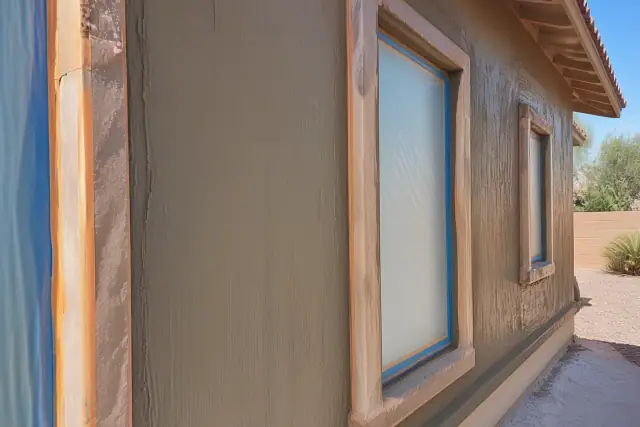
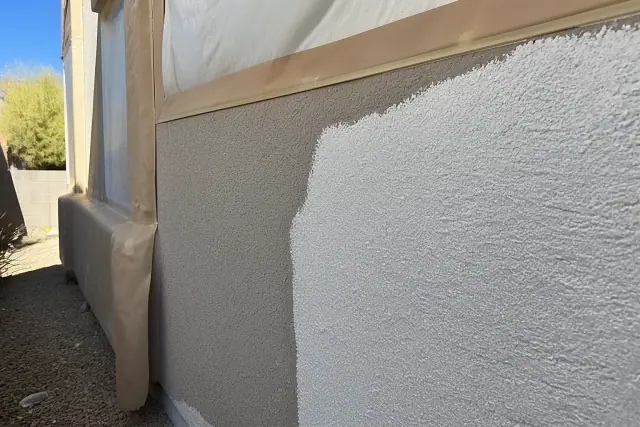
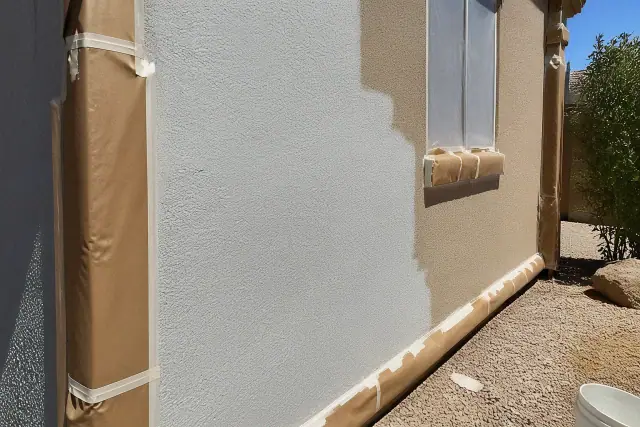
Fresh exterior stucco painting in progress on a textured wall at a jobsite in Phoenix, AZ.

Exterior work addresses ultraviolet wear, thermal cycling, and rain entry before a finish coat is applied. We evaluate sun-facing elevations, seal penetrations and expansion joints, and select acrylic or elastomeric coatings for the wall's actual condition.

Request Estimate

Residential Stucco Painting

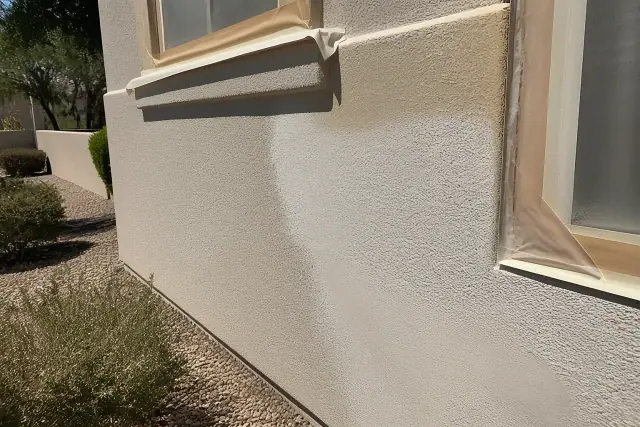
Wet stucco being applied to a residential exterior wall during a home painting project in Phoenix, AZ.

We paint single-story ranch homes, two-story residences, textured accent walls, and Southwestern-style archways. Color conversations can include warm sand, adobe, terracotta, and greige tones, plus the higher heat absorption that darker colors create on west-facing walls.

Request Estimate

Stucco Repair and Painting

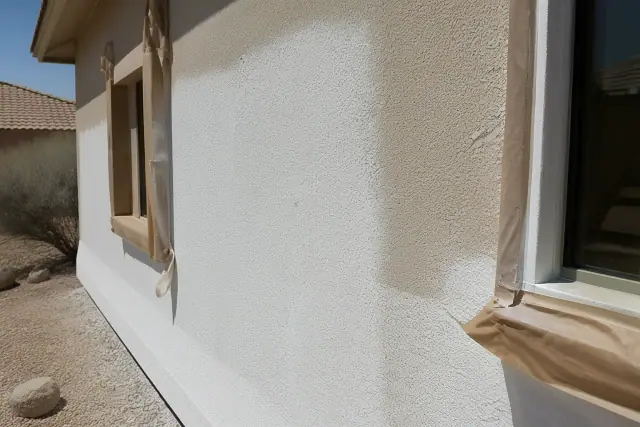
Stucco repair and fresh paint on a residential exterior wall in Phoenix, AZ.

Small cracks can be routed and filled with elastomeric caulk or acrylic patching compound. Larger holes require a scratch-and-brown patch matched to the surrounding texture, while active staining, soft spots, and cracks wider than a hairline must be corrected before coating.

Request Estimate

Interior Stucco Painting

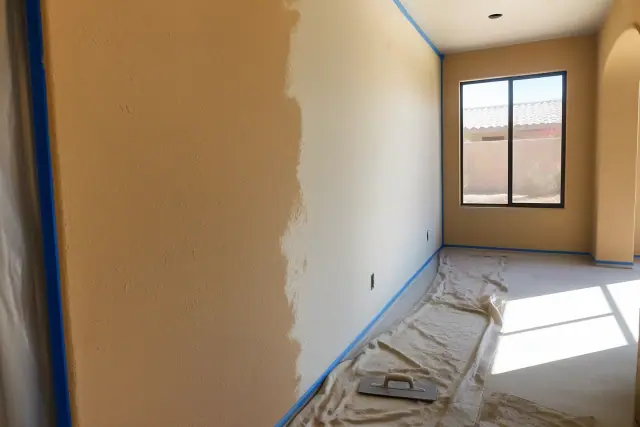
Freshly painted stucco wall with a trowel on a drop cloth in a residential living space in Phoenix, AZ.

Interior stucco is cleaned of dust and grease, and repaired drywall-to-stucco transitions are spot-primed. Standard latex or low-VOC acrylic wall paint suits these spaces, while deep texture needs back-rolling or a thicker-nap roller for even coverage.

Request Estimate

Commercial Stucco Painting

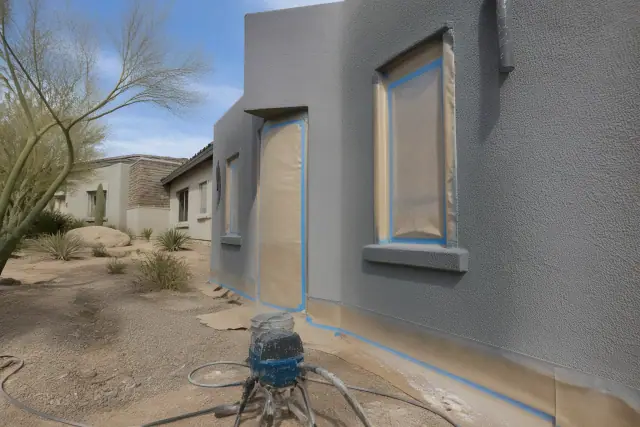
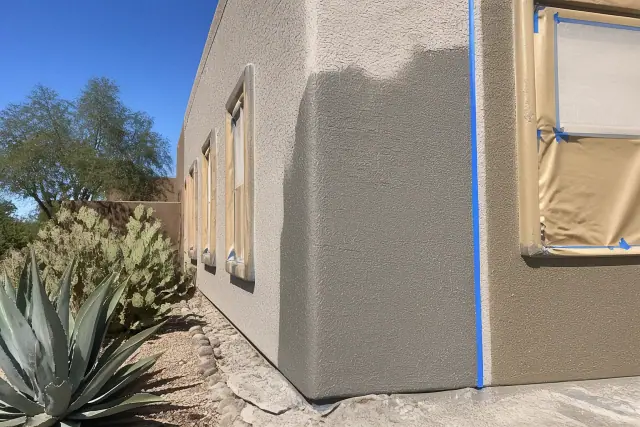
Professional stucco painting project with masking tape and paint sprayer on a jobsite in Phoenix, AZ.

Office parks, retail centers, and other commercial facilities require planning around access and daily operations. We can phase work by building or zone and coordinate with property managers around business hours, tenants, parking, and common areas.

Request Estimate

HOA, Multifamily, and Block Wall Painting

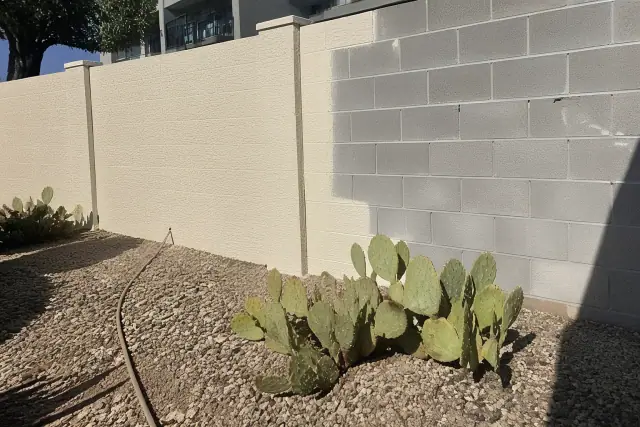
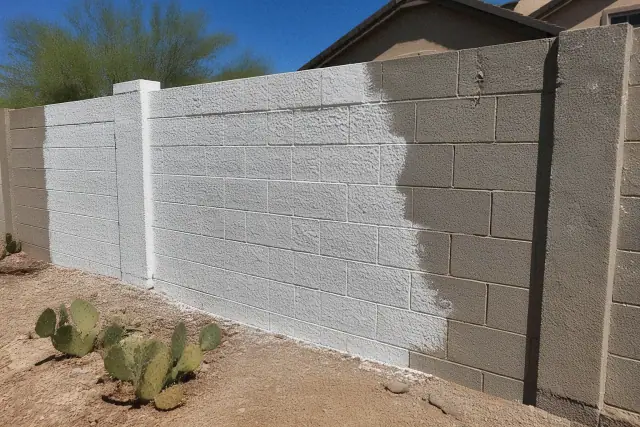
Paint sprayer hose by a half-painted masonry wall with prickly pear cactus in the desert sunlight of Phoenix, AZ.

Apartment communities and HOA properties can be divided into work zones so unaffected access and common areas remain available. Block wall projects receive an added check for mortar-joint deterioration before the stucco cap or textured surface is coated.

Request Estimate
Coatings and Preparation

Stucco Coating & Prep Options

Coating selection starts with surface stability, existing cracks, exposure, and whether the area is occupied. Primer, finish chemistry, and application method work together as a system rather than interchangeable products.

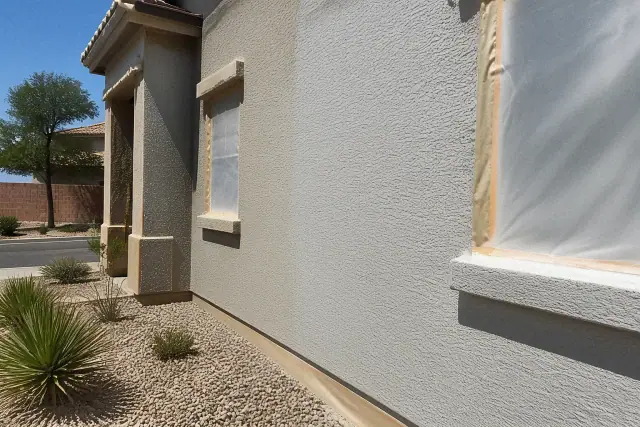
Acrylic coating being applied to a textured stucco wall at a home in Phoenix, AZ.

100 Percent Acrylic Coatings

Standard acrylic stucco paint is the more affordable choice for stable, crack-free walls and newer construction. Formulations with ultraviolet inhibitors are selected for Phoenix sun exposure.

  • Suited to stable stucco without active cracking
  • Lower material cost than elastomeric coatings
  • Available in desert-compatible neutral colors
  • Applied within manufacturer recoat windows
  • Works with masonry primer on bare or repaired areas
Request Estimate
Elastomeric stucco coating being applied to a residential exterior wall in Phoenix, AZ.

Elastomeric Stucco Coatings

Elastomeric paint can stretch up to several times its dry thickness, helping it bridge hairline cracks and improve water resistance on older or already-cracked stucco. It costs more per gallon, so we recommend it only where the wall condition supports the added performance.

  • Flexible film for hairline-crack bridging
  • Added water resistance for exposed walls
  • Useful on older, properly repaired stucco
  • Requires careful cutting and patching during later repairs
  • Not an automatic upgrade for every property
Request Estimate
Low-VOC paint applied to a textured stucco wall at a job site in Phoenix, AZ.

Low-VOC Interior Paint

Interior stucco generally takes standard latex or low-VOC acrylic paint instead of an exterior elastomeric coating. Low-VOC options reduce off-gassing in occupied homes, nurseries, and multifamily units.

  • Designed for indoor textured walls and ceilings
  • Lower off-gassing for occupied living spaces
  • Compatible with spot-primed repaired transitions
  • Applied with back-rolling or a thicker-nap roller
  • Keeps popcorn ceiling work on a separate prep path
Request Estimate
White masonry primer applied to a concrete block wall at a residential jobsite in Phoenix, AZ.

Masonry Primer and Block Filler

Bare patches, new stucco, repaired areas, and porous block can need masonry primer or block filler before topcoat. This step improves adhesion and evens the absorption difference between old and new material.

  • Seals porous bare and repaired areas
  • Improves topcoat adhesion
  • Balances old and new surface porosity
  • Supports more uniform finish-coat curing
  • Selected after substrate and mortar-joint inspection
Request Estimate
Elastomeric coating applied to a stucco wall at a job site in Phoenix, AZ.

Substrate-Specific Coating Systems

A 1980s hard-coat stucco wall, synthetic EIFS, and cinder block with a stucco cap do not receive identical preparation. Inspection identifies the substrate so repairs, primer, and coating remain compatible.

  • Traditional hard-coat stucco assessment
  • Synthetic EIFS-compatible preparation
  • Cinder block mortar-joint checks
  • Texture matching at repaired patches
  • Coating choice based on wall condition and exposure
Request Estimate
Finding the Right Fit

Choosing the Right Stucco Painting Approach

The best approach depends on substrate condition, crack activity, sun exposure, wall area, access, and occupancy. We assess those factors before recommending repairs, primer, acrylic paint, or an elastomeric system.

Condition-First Assessment

We inspect chalking, cracks, soft areas, staining, finish separation, penetrations, and previous patches before discussing color. That keeps the estimate tied to the work the wall actually needs.

Arizona Climate-Rated Materials

Coatings are chosen for Phoenix ultraviolet load, heat, low humidity, and monsoon exposure. Product application follows manufacturer specifications instead of a one-method-fits-all schedule.

Clear, Itemized Estimates

Written estimates separate labor, materials, and repair items, with wall area?not lot size?driving the painting scope. A single-story 1,000 to 1,200 square foot home usually sits below a 3,000+ square foot two-story property because height, masking, equipment, and labor needs differ.

What Sets Us Apart

Why Choose Us for Stucco Painting?

Phoenix Painter Co. is licensed through the Arizona Registrar of Contractors, bonded, and carries general liability insurance for residential and commercial work. We pull required permits when a scope calls for them and stand behind application workmanship, excluding normal wear or substrate movement.

Request Free Estimate

Chalking and UV Fade

Ultraviolet exposure breaks down resin binders in lower-grade acrylic paint, leaving powdery chalk that transfers to your hand. South and west elevations usually fade and degrade first because they receive the most intense sun.

Hairline and Spider Cracks

Hairline cracks and spider cracking around window or door corners can reflect settling and expansion stress. Painting without routing, filling, or patching can let those lines telegraph through the new finish within a season.

Monsoon Moisture Intrusion

Short, heavy rains find unsealed cracks and can carry moisture behind the finish into lath or framing. Proper crack sealing can be the difference between a coating that fails around three years and one that lasts toward ten.

Bubbling and Bond Failure

Moisture behind the finish or paint applied over unstable material can create bubbling, peeling, and loss of adhesion. Active water staining, soft spots, and separated finish coat need investigation before repainting.

Thin Coverage on Heavy Texture

Spray alone can leave thin spots in the valleys of deep stucco texture. Back-rolling works the coating into recesses and helps create more consistent coverage across the surface.

Heat Stress from Dark Colors

Dark colors absorb more solar heat than reflective desert neutrals, increasing surface temperature and accelerating wear on exposed walls. We discuss heat reflectance when clients consider bolder colors for west-facing elevations.

How It Works

Our Stucco Painting Process

Preparation determines how well a stucco coating performs. Our sequence moves from inspection and cleaning through repairs, primer, finish coats, and a final walkthrough.

01.

Assessment and Written Estimate

We identify the substrate, inspect cracks and damaged areas, measure wall area, and review height and access. The resulting estimate separates preparation, repairs, primer, materials, and paint labor.

02.

Controlled Pressure Washing

Pressure washing at controlled PSI removes dirt, chalk, and loose material without blowing out soft stucco. The wall is allowed to dry fully before repair or primer begins.

03.

Crack Repair and Caulking

Crews route and fill small cracks, caulk expansion joints and penetrations, and build larger scratch-and-brown patches where needed. Patched areas are matched to the surrounding texture before coating.

04.

Prime Bare and Repaired Areas

Masonry primer or block filler is applied to bare, new, repaired, or unusually porous areas. Primer promotes adhesion and helps old and new stucco accept the finish coat evenly.

05.

Spray, Back-Roll, and Two Coats

We spray and back-roll textured stucco, then apply two full coats at the manufacturer-specified mil thickness. Recoat windows are followed so each layer cures as intended.

06.

Final Inspection and Touch-Ups

The final walkthrough checks coverage, color consistency, trim cut lines, and caulking around penetrations. Touch-ups are addressed before the project is called complete.

Plan Your Project

Schedule a Stucco Painting Consultation

Request a free on-site estimate to review your stucco's condition, coating options, repair needs, and project scope. You will receive an itemized proposal rather than a rough price based only on square footage.

Stucco Painting Help

Stucco Painting FAQs

These answers cover Phoenix stucco painting costs, timing, preparation, materials, and project planning. A property walkthrough is still the best way to match the coating system to the wall.

Call About Stucco Painting

A typical 1,500 to 2,500 square foot stucco home commonly costs $3,500 to $9,000 to repaint. Number of stories, coating type, access, and the amount of crack or water-damage repair can move the total higher or lower. An itemized on-site estimate is more useful than a flat price based only on floor area.

Yes, when the substrate is sound and preparation is complete. Acrylic or elastomeric paint helps protect stucco from ultraviolet exposure and monsoon moisture while renewing its appearance. Significant structural damage should be repaired before painting.

Problems usually come from coating over damage, using the wrong product, or skipping surface preparation. Trapped moisture can cause bubbling and peeling that forces a repaint within a couple of years, while elastomeric film can make later repairs more involved. Dark colors can also increase heat stress on sun-exposed walls.

Painting a roughly 1,000 square foot stucco home typically ranges from $2,500 to $4,500, depending on wall height, texture, trim detail, and repairs. Homes under 1,500 square feet with minimal damage generally fall toward the lower end, while complex access or patching adds labor.

Spring from February through April and fall from October through November offer moderate temperatures and low humidity for curing. Peak summer heat can make acrylic coatings skin over too quickly, while monsoon weather adds rain risk. Surface temperature and weather conditions should be checked before exterior work begins.

Most Phoenix-area stucco homes need repainting every 5 to 10 years. South- and west-facing walls may show wear sooner, while coating quality, color, crack sealing, and shade influence the interval.

Straightforward repainting may not require a specialty license in Arizona, while stucco patching or repair above applicable thresholds can fall under Arizona Registrar of Contractors requirements. Phoenix Painter Co. is licensed, bonded, and insured, which also supports HOA and property-management documentation needs.

Acrylic paint suits stable, crack-free stucco and usually costs less per gallon. Elastomeric coating is more flexible and water resistant, making it useful for properly repaired older walls with hairline cracking. The wall condition should determine the choice rather than treating elastomeric as an automatic upgrade.

Yes. Cracks wider than a hairline, active staining, soft spots, holes, and separated finish coat should be repaired before topcoat. Painting over those conditions can trap moisture and allow defects to reappear through the new finish.

Preparation begins with controlled pressure washing and a full drying period. Cracks, expansion joints, penetrations, and damaged areas are repaired or sealed, then bare and patched areas receive masonry primer or block filler. Masking and product-specific conditions are checked before finish coats begin.

Spraying distributes coating across broad wall areas, while back-rolling presses it into the valleys of textured stucco. Used together, the methods reduce thin spots that spray alone can leave on heavy texture and help create uniform coverage.

Yes. Interior stucco usually takes standard latex or low-VOC acrylic after cleaning and spot-priming repaired transitions. Deep texture needs back-rolling or a thicker-nap roller, and popcorn ceiling texture should be evaluated separately because removal may be more appropriate than painting.

Commercial, apartment, and HOA projects can be divided into buildings or zones so operations, parking, and common-area access remain available. Scheduling is coordinated with property managers around business hours or tenant routines, and block walls are checked for mortar-joint deterioration before coating.