Proudly serving Phoenix, Scottsdale, Mesa, Chandler, Tempe, Glendale & surrounding areasCall or Text 24/7: 602-507-8393
Aerial view of a residential neighborhood with desert landscaping and Saguaro cacti in Phoenix, AZ during golden hour.

Interior and Exterior Painting Services in Paradise Valley, Arizona

Phoenix Painter Co. provides interior painting in Paradise Valley, along with exterior and commercial painting for homes, resorts, retail spaces, and offices. Our crews also handle cabinet refinishing, stucco painting, drywall repair and painting, popcorn ceiling removal, HOA projects, apartment and multifamily work, and block wall painting. We work across the town's mid-century ranch homes, contemporary custom builds, and resort-adjacent properties. Every quote reflects the surface condition, ceiling height, prep needs, and finish level found during an on-site walkthrough.

Strong UV exposure through south- and west-facing windows can fade wall color, dry caulk lines, and yellow light trim within a few years. Monsoon humidity can reveal drywall seams, weaken adhesion, or slow the cure time of specialty finishes. We protect floors, furniture, and fixtures before patching, sanding, caulking, and spot-priming the surfaces that need it. Low VOC or zero VOC coatings and daily cleanup help keep occupied interiors more manageable throughout the work.

We serve properties throughout Paradise Valley's 15.7 square miles, a community of roughly 12,658 residents, including areas near Camelback Mountain, Mummy Mountain, and the Lincoln Drive resort corridor. Request a free consultation to walk the property and define the right painting scope before we quote it.

★ ★ ★ ★ ★4.9/5.0 Customer Rating - 28 Years of Painting Experience - Thousands of Projects Completed - Licensed, Bonded & Insured - Serving Homes, Businesses & HOAs
Residential & Commercial Painting

Painting Services in Paradise Valley, AZ

Choose a service based on the surface, property type, prep condition, and finish you need rather than a one-size-fits-all package. We use the same walkthrough-based approach for projects in Scottsdale, AZ , as well as supported work in Phoenix and Cave Creek.

Interior Painting

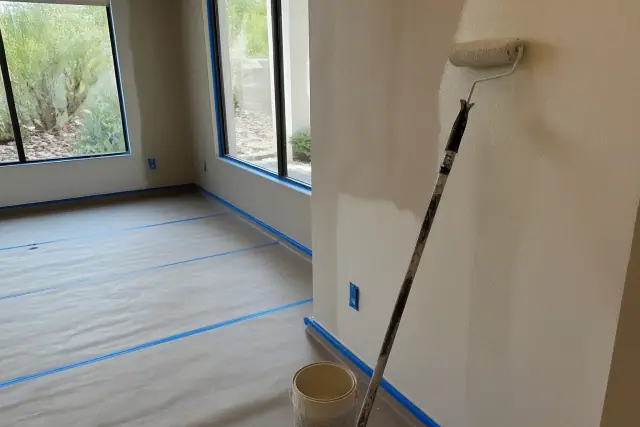
Interior painting in progress with taped trim and paint supplies in a home in Paradise Valley, AZ.

From one-room refreshes to whole-house work in 5,000-square-foot custom homes, we quote walls, ceilings, trim, and prep by actual scope. Industry benchmarks run $2 to $6 per square foot, with a typical completed interior project around $3,800, while high ceilings and specialty plaster can add labor.

Explore Service

Exterior Painting

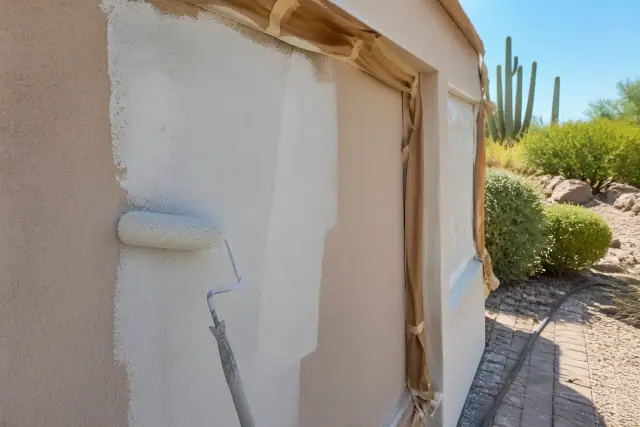
A painter applying fresh paint to a stucco wall at a home jobsite in Paradise Valley, AZ.

Exterior-grade acrylic coatings and back-brushed application help textured stucco face intense UV and wind-driven monsoon rain. Whole-home exterior projects generally run $4.79 to $9.04 per square foot depending on preparation and coating quality.

Explore Service

Commercial Painting

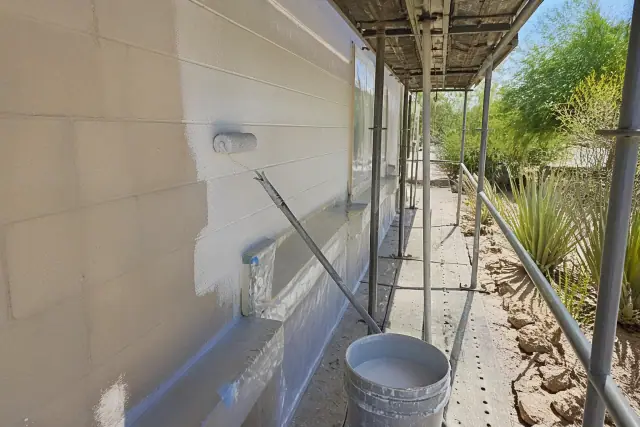
Painter applying elastomeric paint to a commercial building wall on a scaffold in Paradise Valley, AZ.

For resorts, retail spaces, offices, and multi-tenant properties, phased scheduling can limit disruption to customers and occupants. Durable, high-traffic coatings are selected for walls and common areas with property-manager coordination built into the plan.

Explore Service

Cabinet Painting & Refinishing

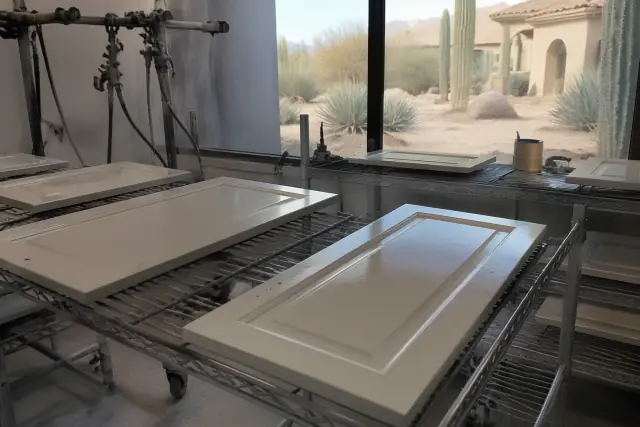
Freshly painted kitchen cabinet doors on a drying rack in a Paradise Valley, AZ workspace with desert views.

Kitchen and bathroom cabinets are degreased, sanded, primed with a bonding primer, and sprayed with a catalyzed or enamel topcoat. Controlled application and full masking create a factory-level finish without the cost of full cabinet replacement.

Stucco Painting

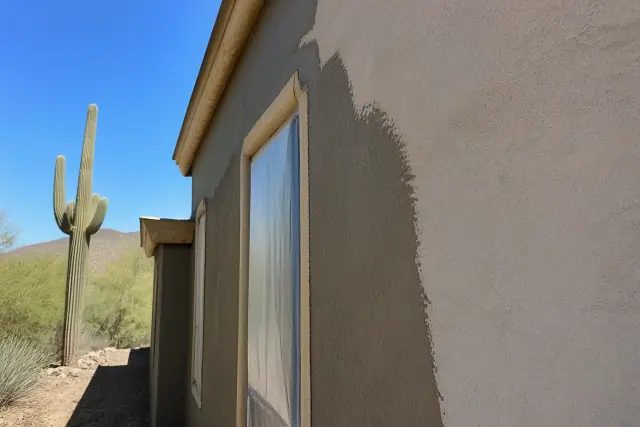
Freshly applied stucco wall with protective masking near a window at a job site in Paradise Valley, AZ.

Hairline cracks caused by thermal expansion are patched with elastomeric filler before painting. Breathable stucco coatings allow moisture vapor to escape instead of trapping it behind the finish coat.

Drywall Repair & Painting

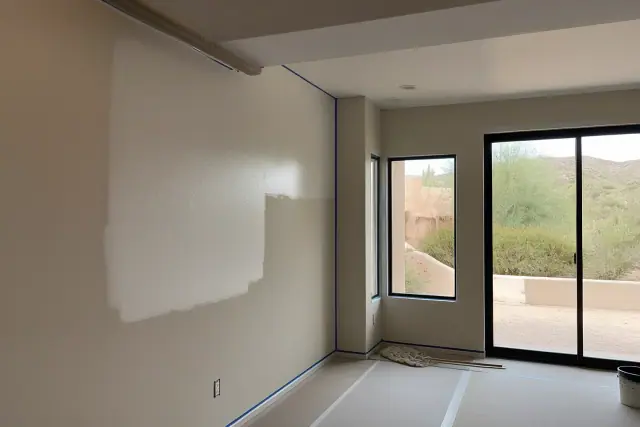
Painter applying fresh paint to living room walls in a home in Paradise Valley, AZ.

Cracks, nail pops, and separated seams are patched, taped, and texture-matched before paint is applied. This prep is standard on repaints when a Paradise Valley home older than 15 years shows drywall damage.

Popcorn Ceiling Removal

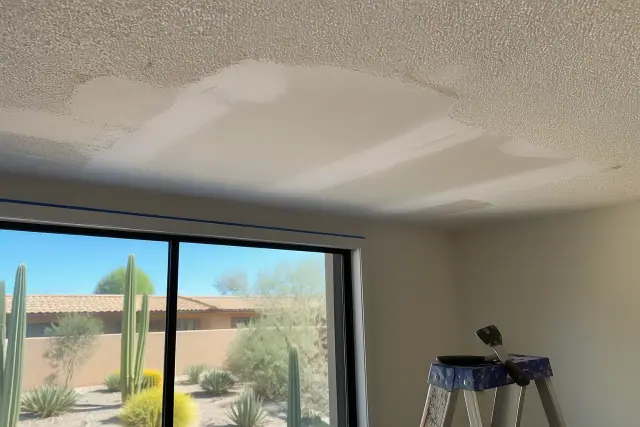
Sanded drywall repair on a popcorn ceiling in a Paradise Valley, AZ home with a putty knife on a ladder.

Ceilings from homes built in the 1970s through 1990s can be scraped, skim-coated, and retextured or smoothed after warranted testing for asbestos-containing material. Removal typically adds one to two days depending on ceiling area and texture thickness.

HOA Painting

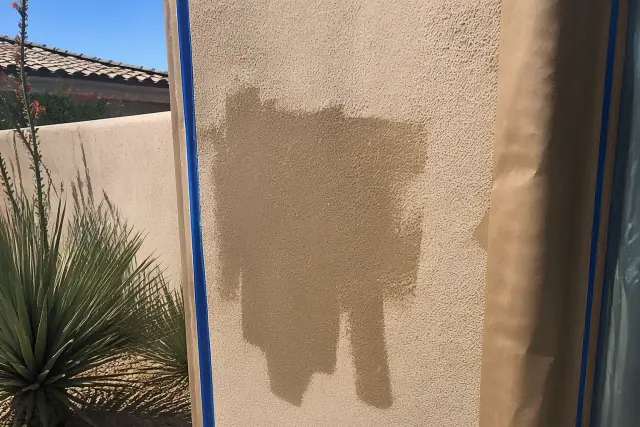
Freshly painted stucco wall with blue painter's tape and desert landscaping in Paradise Valley, AZ.

For communities whose architectural guidelines cover visible interior surfaces near entries or street-facing windows, we help prepare color submissions. Coordination with boards and management companies keeps the approved scope aligned before painting begins.

Apartment & Multifamily Painting

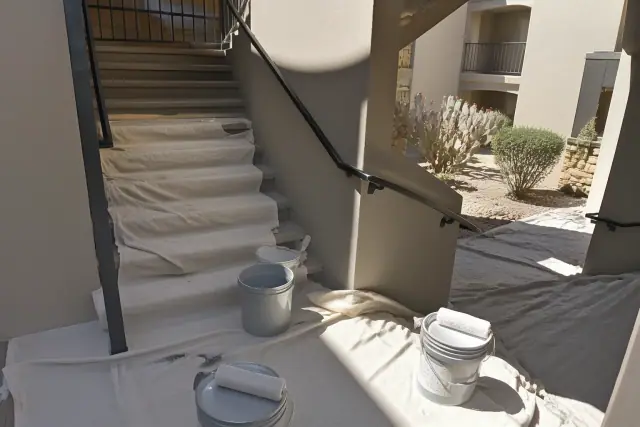
Painter's equipment on drop cloths in a residential stairwell with a view of desert landscaping in Paradise Valley, AZ.

Unit turns and common-area repaints are scheduled around occupancy timelines to minimize vacancy days. Consistent color and sheen standards help property managers maintain a uniform finish across apartments and multifamily buildings.

Block Wall Painting

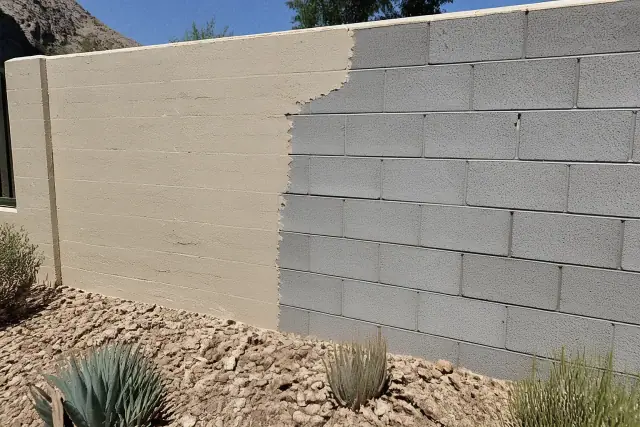
A residential masonry wall in Paradise Valley, AZ, showing half-painted stone texture with low-growing desert succulents.

Perimeter walls are pressure-washed and treated for efflorescence before masonry-grade elastomeric coatings are applied. The coating flexes with block movement and resists the mineral staining associated with local soil moisture.

Choosing a Painter

How to Choose a Paradise Valley Painting Contractor

Compare contractors on the preparation they include, the coatings and application methods they recommend, and how clearly they define timing and scope. Paradise Valley homes often add high ceilings, specialty plaster, custom millwork, and occupied-space requirements that should be addressed before work starts.

Surface Preparation Plan

A useful proposal identifies patching, sanding, caulking, texture matching, and spot-priming rather than hiding prep in a generic paint line item. Correct primer selection is especially important on bare drywall, repaired areas, and alkaline plaster.

Low & Zero VOC Coatings

Low VOC and zero VOC options reduce odor and off-gassing on occupied interiors. Ask how the crew will manage ventilation, masking, surface protection, and cleanup when the household remains in place.

Precision Application Methods

Spray and back-roll methods suit different surfaces, while careful cut-in work matters around crown molding, coffered ceilings, and custom millwork. The application plan should match the substrate and sheen rather than rely on one technique everywhere.

Realistic Project Timeline

Most single rooms take one day, while larger full-interior repaints typically need three to seven working days. Ceiling height, repair needs, trim detail, and specialty finishes can extend the schedule and should be discussed before work begins.

Specialty Finish Experience

Venetian plaster, limewash, faux finishes, and custom textures require slower application and multiple layers. These surfaces should be scoped separately from standard flat or eggshell wall painting.

Written Scope & Estimate

A written estimate should identify measured area, coat count, sheen, repair work, and separately priced trim or ceiling details. That makes it easier to compare proposals on actual scope instead of the bottom-line number alone.

Paradise Valley Painting Issues

Common Interior Paint Problems in Paradise Valley

Desert sun, dry heat, seasonal humidity, hard-water residue, and older ceiling or wall materials can create different failure patterns. Identifying the cause first helps determine whether the job needs cleaning, repair, specialty primer, or a complete repaint.

Request a Paint Assessment

Sun-Faded Wall Color

Afternoon UV through south- and west-facing glass can shift wall color and yellow once-crisp white trim. Sample boards viewed at different times of day help reveal how a replacement color will read under direct desert light.

Drywall Cracks & Nail Pops

Arizona's dry heat and occasional monsoon moisture can expose cracks, nail pops, and separating seams. Patching, taping, and matching the existing texture before painting keeps the repair from reading as a visible patch.

Peeling Paint & Adhesion Loss

Skipped caulking, improper primer on new or repaired drywall, and poorly cleaned surfaces can cause early coating failure. Correcting the underlying preparation issue is more durable than applying another finish coat over weak paint.

Monsoon Humidity & Slow Curing

The June-through-September monsoon season can bring humidity spikes that affect drying and adhesion. Cabinet topcoats and specialty finishes benefit from scheduling around storm systems when controlled cure time matters most.

Hard-Water Mineral Transfer

Hard water in the Salt River Project service area can leave mineral buildup on kitchen and bathroom fixtures that transfers to nearby painted trim. Cleaning and degreasing these surfaces before primer helps protect the new coating's bond.

Aging Popcorn Ceiling Texture

Original popcorn texture can date an interior and complicate repairs when damaged sections no longer blend. When a home's age and permit history warrant it, testing for asbestos-containing material comes before scraping under Arizona Department of Environmental Quality guidance.

Why Choose Us

Why Choose Phoenix Painter Co. in Paradise Valley?

Our approach combines local property knowledge with occupied-home protection, a detailed written scope, and a final quality check. That process is designed for the town's range of custom interiors, specialty surfaces, access requirements, and seasonal painting conditions.

Local Property & Climate Knowledge

Experience across mid-century homes, contemporary custom builds, and resort-adjacent properties informs how we plan stucco-to-drywall transitions, alkaline plaster, high ceilings, gate access, and property-management coordination. We also account for work-hour requirements and monsoon timing.

General Liability & Lead-Safe Practices

Phoenix Painter Co. carries general liability insurance and follows Arizona Registrar of Contractors licensing requirements when a project requires a permit. When painted surfaces in homes built before 1978 will be disturbed, we follow EPA Renovation, Repair, and Painting Rule protocols for lead-safe work practices.

Detailed Prep & Final Walkthrough

Floors, furniture, and fixtures are protected before repairs and coating begin, and the space is cleaned at the end of each day. A final walkthrough checks coverage, cut lines, and touch-ups under natural light against the agreed scope.

Simple Process

Our Interior Painting Process in Paradise Valley

Each project moves from an in-person assessment to a defined scope, protected work area, surface preparation, coating application, and final review. The sequence keeps repairs, finish choices, and expectations visible before each stage begins.

01.

On-Site Walkthrough

We assess wall condition, existing sheen, substrate type, window exposure, and any drywall or plaster repairs. Room size, ceiling height, trim detail, and access needs are noted before quoting.

02.

Written Scope & Estimate

The estimate documents square footage, coat count, sheen, surface repairs, and separately scoped work such as ceilings, trim, doors, or popcorn removal. It also sets the expected project sequence and timing.

03.

Protect the Work Area

Floors, furniture, fixtures, and adjacent surfaces are covered with drop cloths and plastic sheeting. Masking and ventilation are arranged around the rooms that will remain occupied.

04.

Repair, Sand & Prime

We patch damage, sand rough areas, caulk gaps at trim and ceiling lines, and spot-prime repaired or bare drywall. Kitchens and bathrooms receive cleaning and degreasing appropriate to the surface before primer.

05.

Apply the Finish Coats

Premium low VOC paint is applied in the method suited to the surface, typically with two finish coats on walls. Trim and doors receive a separate coat selected for their sheen and durability needs.

06.

Daily Cleanup & Final Walkthrough

The crew cleans the work area at the end of each day so the home stays usable. At completion, we review cut lines, coverage, and touch-ups with the homeowner and address anything outside the agreed scope before closing the project.

Project Results

Painting Outcomes for Paradise Valley Properties

Case Study 1: Interior Repaints: Patching, spot-priming, two finish coats, and clean cut lines create even coverage across drywall, plaster, trim, and doors.

Case Study 2: Cabinet Refinishing: Degreasing, sanding, bonding primer, and sprayed catalyzed or enamel topcoats produce a smooth finish without full cabinet replacement.

Case Study 3: Exterior Surfaces: Crack repair, back-brushed acrylic coatings, and masonry-grade elastomeric products help stucco and block walls handle intense UV, thermal movement, and mineral staining.

Plan Your Project

Schedule a Paradise Valley
Painting
Consultation

Request a free consultation for an on-site walkthrough of your walls, ceilings, trim, cabinets, stucco, or commercial space. We will identify preparation needs and provide a written estimate based on the surfaces and finish level involved.

Local Painting Help

Interior Painting FAQs for Paradise Valley, AZ

These answers cover pricing benchmarks, project timing, preparation, coating choices, local conditions, and property coordination. A walkthrough is still the best way to define the scope for a specific Paradise Valley interior.

Call Our Painters

Using the common $2 to $6 per square foot benchmark, a 2,000-square-foot interior typically runs $4,000 to $12,000 depending on ceiling height, room count, prep, and paint quality. Trim and baseboard work generally adds $400 to $560 per project, while door painting typically runs $240 to $320 depending on the number of doors. We use an on-site walkthrough to quote the actual scope.

A 1,000-square-foot interior typically costs $2,000 to $6,000 using the standard $2 to $6 per square foot benchmark. Multiple small rooms and hallways may require more cut-in work per square foot than an open plan. Coat count, paint quality, ceilings, trim, and surface repairs also affect the final quote.

A single room typically takes one full day, including prep, needed primer, and two finish coats. Larger full-interior repaints commonly run three to seven working days. Extensive drywall repair, tall ceilings, detailed trim, popcorn removal, and specialty finishes can add time.

A written estimate should identify square footage, coat count, sheen, and preparation such as patching, sanding, caulking, or popcorn removal. It should also separate ceilings, trim, doors, and specialty finishes when they are outside the standard wall scope. That detail makes proposal comparisons more meaningful.

Warm whites, soft neutrals, earth tones, warm grays, and desert-inspired palettes tend to stay balanced under strong natural light. Stark cool whites can look flat in direct sun, while bold accents often work better in spaces with less south- or west-facing exposure. We use drawdowns and large sample boards to compare colors in the room at different times of day.

We use low VOC and zero VOC coatings as standard options for occupied interior projects to reduce odor and off-gassing. Surface protection, ventilation, masking, and daily cleanup are also part of keeping the home usable. The coating and sheen are matched to the specific wall, trim, cabinet, or ceiling surface.

Yes. Damaged areas can be patched, taped, sanded, and texture-matched before primer and paint are applied. Repairing the substrate first helps keep cracks, nail pops, and separated seams from remaining visible through the new finish.

The process starts with degreasing and sanding, followed by a bonding primer. A catalyzed or enamel topcoat is then sprayed in a controlled setting or on-site with full masking. This approach creates a factory-level finish without replacing the cabinet boxes and doors.

Testing for asbestos-containing material comes first when the home's age and permit history warrant it under Arizona Department of Environmental Quality guidance. After that review, the ceiling can be scraped, skim-coated, and retextured or smooth-finished. Removal typically adds one to two days depending on area and texture thickness.

Yes. Humidity spikes during the typical June-through-September monsoon season can slow drying or affect adhesion during storm systems. We pay particular attention to weather windows for cabinet refinishing and specialty finishes that need controlled cure times.

When work will disturb old painted surfaces in a pre-1978 home, we follow EPA Renovation, Repair, and Painting Rule protocols for lead-safe work practices. The planned disturbance and protection steps are reviewed before sanding, scraping, or repair begins.

Interior walls in a well-maintained Paradise Valley home typically hold their finish for 5 to 10 years. Strong window exposure, frequent use, moisture near kitchens and baths, and substrate movement can create touch-up or repaint needs sooner. Surface condition should guide the decision more than the calendar alone.

We help with color submission paperwork when community guidelines apply to visible interior surfaces near entries or street-facing windows. We also coordinate with boards and management companies so the painting scope follows the approved color and scheduling requirements.

We serve Paradise Valley neighborhoods near Camelback Country Estates, Palo Cristi, Clearwater Hills, Camelback Mountain, Mummy Mountain, and the Lincoln Drive resort corridor. The service area also includes Scottsdale, Phoenix, and Cave Creek, with greater Phoenix metro travel available for larger residential and commercial projects.

Yes. The supported project mix includes apartments and multifamily communities, resorts, retail spaces, offices, and multi-tenant commercial buildings, as well as high-end residential properties. Scheduling and coating choices are adjusted around occupancy, business hours, common-area traffic, and property-management coordination.