Proudly serving Phoenix, Scottsdale, Mesa, Chandler, Tempe, Glendale & surrounding areasCall or Text 24/7: 602-507-8393
Aerial view of a residential neighborhood with desert landscaping and Saguaro cacti in Phoenix, AZ during golden hour.

Drywall Repair, Patching and Texture Matching Services in Phoenix, AZ

Phoenix Painter Co. provides drywall repair and painting in Phoenix for nail pops, cracks, holes, damaged ceiling sections, and visible patchwork. One crew tapes, muds, sands, textures, primes, and blends paint so repaired walls and ceilings read as one continuous surface. The same team can address interior painting and popcorn ceiling removal when the surrounding finish needs broader work.

Five months of triple-digit heat followed by monsoon winds and humidity can stress drywall seams and paint films across Valley properties each year. That movement often appears as nail pops, corner-bead separation, or diagonal cracks around doors and windows, while water stains must be traced before finishing begins. Our crews assess the damage, choose the appropriate tape and compound, and complete prep and coating as one coordinated job.

We follow Gypsum Association finishing levels and ASTM C840 application practices, then quote a flat price after inspecting the damage, texture, and paint sheen.

Phoenix Painter Co. provides drywall repair and painting throughout Phoenix and the surrounding metro, including Scottsdale, Tempe, Mesa, Glendale, Chandler, and Gilbert.

★ ★ ★ ★ ★4.9/5.0 Customer Rating · 28 Years of Painting Experience · Thousands of Projects Completed · Licensed, Bonded & Insured · Serving Homes, Businesses & HOAs

Drywall Repair & Painting Benefits

What Does Drywall Repair & Painting Include?

Drywall repair and painting combine structural patching with the finish work needed to make that repair disappear. The same crew cuts in replacement board when necessary, embeds tape, feathers joint compound, matches texture, primes the patch, and blends the surrounding color and sheen.

Phoenix-market drywall pricing in published estimates place small fixes such as nail pops, hairline cracks, and holes under six inches at $200 to $350. Medium repairs such as a doorknob hole, water-stained ceiling section, or cracked corner bead run $350 to $650, while multiple sheets, framing work, or full-room re-texturing can run $650 to $2,000 or more depending on scope and texture matching.

The repair method starts with the cause. Cosmetic fastener pops need a different treatment than diagonal settling cracks, separated corner bead, failed tape, or material damaged by a leak that must be corrected before wall work begins.

Benefits of Coordinated Repair & Painting

Prompt repairs close openings to dust, pests, and moisture while keeping damage from spreading through the board, framing, or insulation. In published guidance, a neglected issue described as a $250 patch can become a $1,500 sheet replacement after water intrusion reaches materials behind the wall.

  • One crew handles patching, texture, primer, and paint blending.
  • Priming prevents repaired areas from reading as dull, flat spots.
  • Texture and sheen matching reduce visible repair lines under angled light.
  • Mesh or paper tape is selected to suit the crack or seam.
  • Dust control and final sanding prepare a uniform paint surface.
  • Flat quotes account for damage, square footage, texture, and sheen.
  • Full-wall painting is available when faded paint will not spot-match cleanly.
  • Fast-setting compound can shorten small repairs without skipping prep.
Wall & Ceiling Services

Drywall Repair & Painting

The service scope ranges from quick cosmetic corrections to multi-sheet replacement, texture work, and complete wall or ceiling repainting. Each option pairs the repair method with the finish needed for the surrounding surface, lighting, and existing coating.

Small Hole & Nail Pop Repair

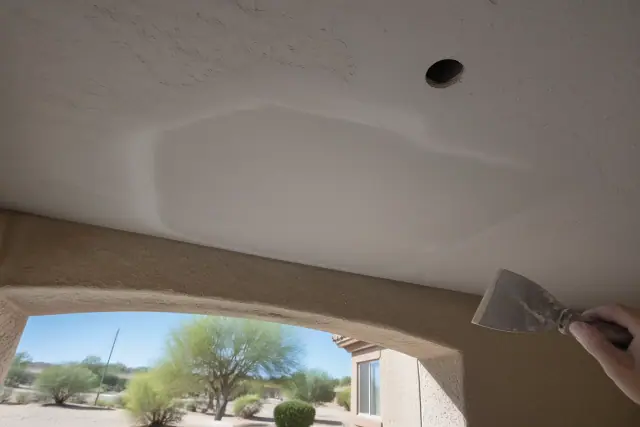
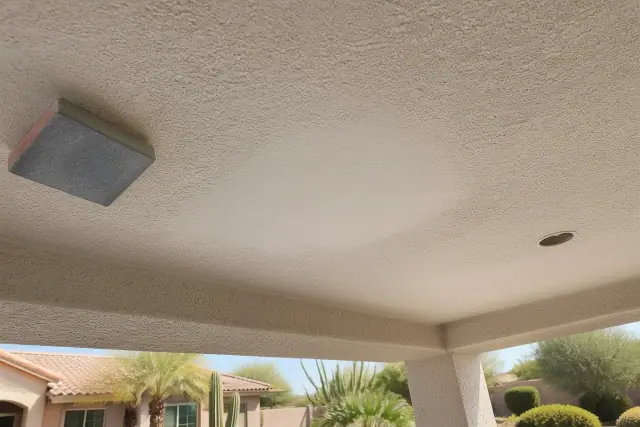
Sanded drywall patch on a textured ceiling for a repair project in Phoenix, AZ.

Small holes, old anchor marks, nail pops, and screw pops can often be reset, filled, sanded, primed, and touched up with fast-setting compound in a compact visit. The goal is a flat repair that does not cast a shadow or absorb paint differently from the surrounding wall.

Request Estimate

Crack & Seam Repair

Sanded drywall ceiling patch with joint knife on floor at a residential jobsite in Phoenix, AZ.

Diagonal cracks near doors and windows and reopened joint seams need more than surface spackle. We use mesh or paper tape with the appropriate setting compound, feather the repair beyond the damaged line, and sand it into the surrounding plane.

Request Estimate

Water-Damaged Drywall Repair

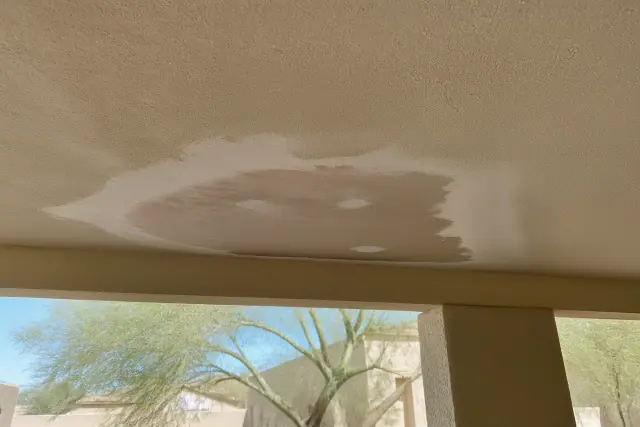
Sanded drywall repair on a ceiling in Phoenix, AZ, prepared for priming and painting.

A stained ceiling or softened wall signals moisture that must be traced and corrected before patching begins. Once the source is addressed, damaged material can be removed or stabilized, rebuilt, matched to the existing texture, primed, and painted.

Request Estimate

Texture Matching & Re-Texturing

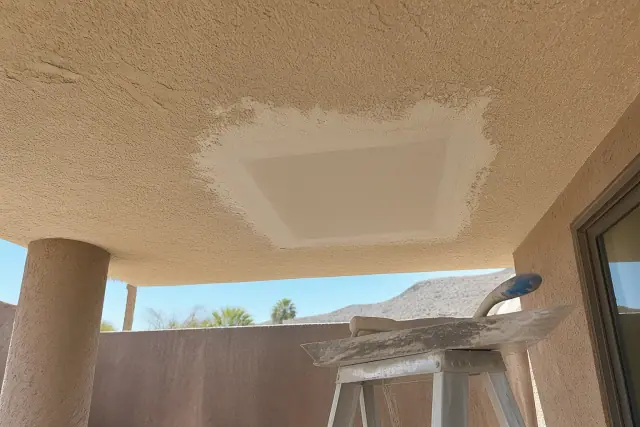
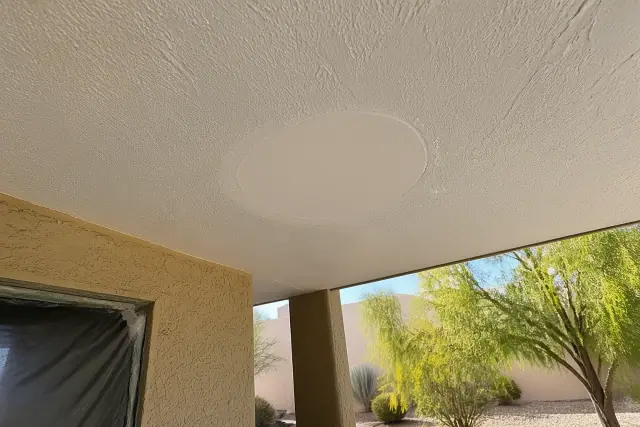
A sanded drywall repair on a textured ceiling with a hawk and trowel on a ladder at a job site in Phoenix, AZ.

Repair edges are feathered into the existing finish so smooth walls, light knockdown, and other supported textures transition naturally. Larger areas can be re-textured when isolated matching would leave a visible difference across a wall or ceiling.

Request Estimate

Paint Blending & Full-Wall Painting

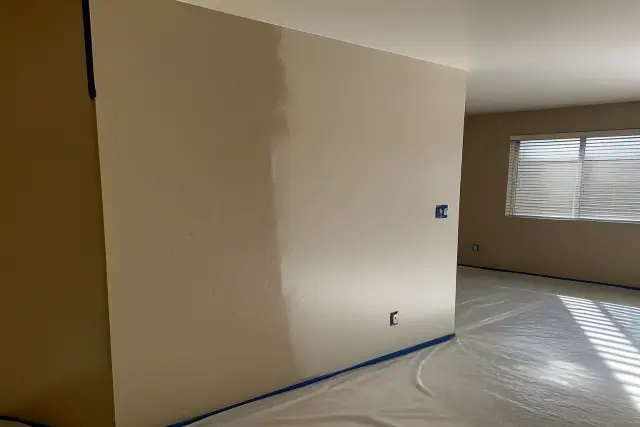
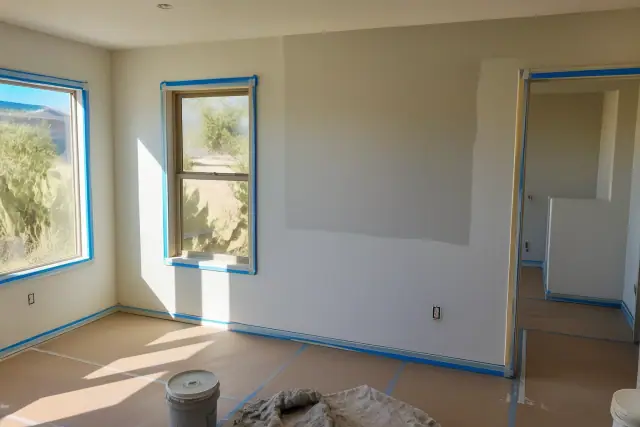
Freshly painted wall showing a color transition in a residential living space in Phoenix, AZ.

A recent coating can often be spot-painted when its formula and sheen are closely matched. For faded surfaces or strong side lighting, painting the full wall or room produces a more consistent finish; color changes receive primer and a minimum of two finish coats, with back-rolling used for even film thickness.

Request Estimate

Popcorn Ceiling Removal & Refinishing

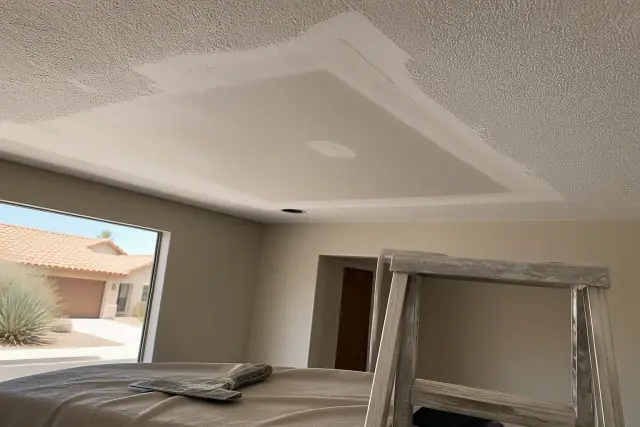
Sanded drywall patch on a ceiling in Phoenix, AZ, with a ladder and joint knife on a drop cloth in a home.

Popcorn texture was common in Phoenix construction through the 1980s. Ceilings installed before 1980 require asbestos testing before removal; once cleared, the surface is wet-scraped under containment, skim-coated to a smooth Level 4 finish, primed, and finished smooth or with light knockdown texture.

Request Estimate
Repair & Finish Options

Drywall Repair Options

The right option depends on whether damage is cosmetic, movement-related, moisture-related, or part of an older finish update. Room lighting, wall sheen, texture depth, and the age of the existing paint also determine how far the finishing work should extend.

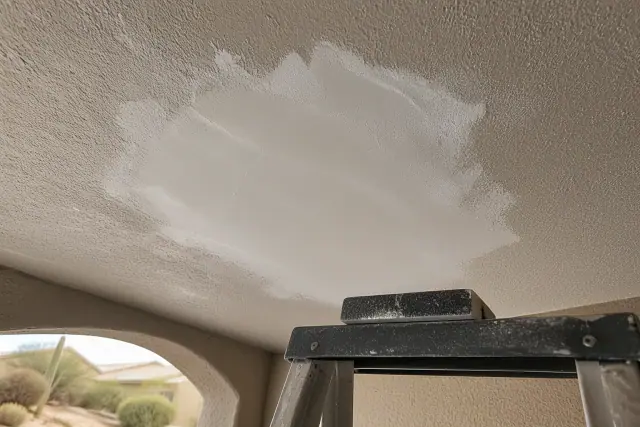
Sanded drywall patch on a textured ceiling in a Phoenix, AZ home, with a sanding block on a ladder step.

Small Surface Repairs

Compact cosmetic damage can usually be corrected without replacing a full sheet. Each repair is secured, filled, smoothed, primed, and evaluated under the room's normal light before paint is blended.

  • Nail pops
  • Screw pops
  • Holes under six inches
  • Hairline cracks
  • Old anchor and fastener holes
Request Estimate
Technician applying joint compound to a corner seam in a residential living room in Phoenix, AZ.

Joint, Seam & Corner Repairs

Movement at framing openings and panel joints can split compound, lift tape, or separate corner bead. These repairs rebuild the joint rather than merely covering the visible line.

  • Diagonal door-corner cracks
  • Window-corner stress cracks
  • Taping seam failure
  • Corner bead separation
  • Mesh or paper tape reinforcement
Request Estimate
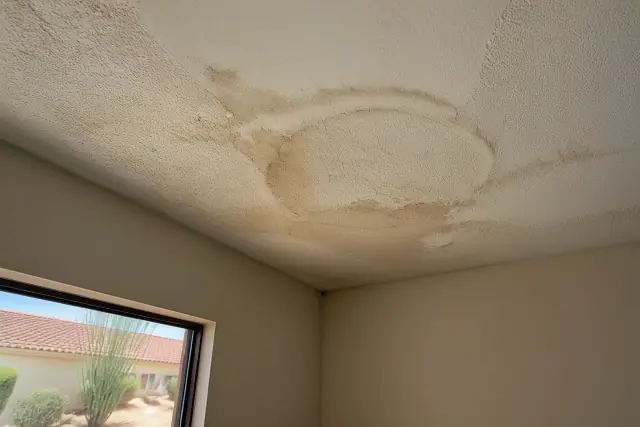
Water-stained and peeling drywall in a Phoenix, AZ home with desert landscaping visible through the window.

Water-Stained Walls & Ceilings

Moisture work begins with confirming that the leak has been traced and fixed. Repairing before that step risks another stain, softened board, or failed finish within a season.

  • Leak source addressed first
  • Soft or compromised board evaluated
  • Damaged sections removed as needed
  • Ceiling or wall texture matched
  • Repaired area primed before paint
Request Estimate
Sanded drywall patch with matching texture on a ceiling during a repair project in Phoenix, AZ.

Texture & Finish Matching

Professional finishing uses progressively wider compound applications to move the seam into the surrounding wall plane. Three coats, complete drying, controlled sanding, and the proper Level 4 or Level 5 finish help prevent ridges and shadows under raking light.

  • Three progressively wider compound coats
  • Full drying between applications
  • Pole sanding with dust control
  • Level 4 finish for standard painted surfaces
  • Level 5 finish where sheen or lighting demands it
Request Estimate
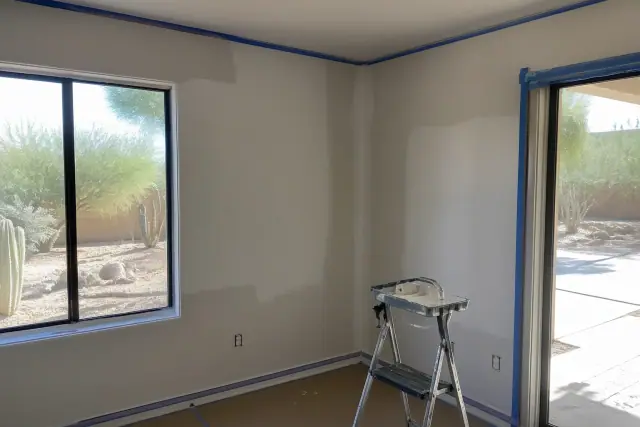
Drywall repair and paint progress in a Phoenix, AZ living room with taped trim and fresh paint strokes.

Paint Completion Options

Finishing can stop at a primed structural repair or continue through spot blending, a full wall, or the full room. We explain when sun fade, sheen, or existing coating age will make a localized touch-up more visible.

  • Primed structural repair
  • Spot paint and sheen matching
  • Full-wall repainting
  • Full-room color change
  • Smooth or light knockdown ceiling finish
Request Estimate
Finding the Right Repair Scope

Choosing the Right Repair Approach

A sound plan considers the cause of damage, panel condition, texture, light direction, and how closely the existing paint can be matched. Small cosmetic flaws may need only localized work, while active moisture, structural movement, multiple sheets, or a faded finish can require a broader repair and repainting scope.

One Crew from Patch to Paint

The crew that opens and repairs the damaged area also feathers the texture, primes the patch, and blends the finish. Keeping those steps together avoids a structurally sound patch that still reads as a different color or sheen.

Phoenix Climate Material Selection

Phoenix heat, intense daylight, and very low ambient humidity affect compound working time and how quickly paint reveals lap marks or uneven sheen. We select materials and manage application time for those conditions rather than relying on finish choices that can break down in eighteen months under Arizona exposure.

Standards-Based Surface Prep

Our drywall work follows Gypsum Association finish levels and ASTM C840 application standards, and Phoenix Painter Co. carries the licensing required to operate as an Arizona contractor. For structures built before 1978, we follow EPA RRP lead-safe work practices; careful filling, sanding, caulking, and priming are the prep steps that can separate a five-year finish from a fifteen-year finish.

What Sets Our Repair Work Apart

Why Choose Us for Drywall Repair & Painting?

A finished repair should be sound behind the paint and difficult to find after the paint dries. We inspect the cause, explain whether a spot blend or broader repaint will look more consistent, and provide a flat quote that accounts for damage, texture matching, square footage, and sheen before work begins.

Request Estimate

Nail & Screw Pops

Raised fasteners are usually cosmetic, but simply covering the dimple can let it return. The fastener is reset or secured, the depression is filled and sanded, and the spot is primed before paint blending.

Diagonal Stress Cracks

Daily swings of 30 to 40 degrees between afternoon highs and overnight lows can keep framing and drywall seams moving. Expansive clay soils in parts of the Salt River Valley can add minor foundation movement, which often appears as diagonal cracks near door and window corners.

Water Stains & Moisture Damage

Monsoon humidity spikes in July and August can expose weak seals in older stucco-clad homes, while plumbing or roof leaks can stain and soften drywall at any time. The moisture source must be fixed before the damaged surface is rebuilt and coated.

Corner Bead Separation

Outside corners can split, dent, or pull away as framing moves and compounds age. Published guidance notes more corner-bead separation in homes built before the 1990s than in newer Sun Corridor construction, so the loose edge needs to be rebuilt rather than hidden with paint.

Taping Seam Failure

Joint tape can bubble, lift, or crack when air was trapped in the original base coat or repeated movement breaks the bond. The failed section is opened, re-embedded without air pockets, feathered with joint compound, dried, and sanded flat.

Visible Patches & Paint Flashing

An unprimed patch absorbs paint differently and can look like a flat spot under kitchen lighting or desert sun from west- and south-facing windows. Texture depth, sheen, formula, and surrounding fade all have to be considered before choosing a touch-up or full-wall repaint.

How It Works

Our Drywall Repair & Painting Process

The process moves from diagnosis to a paint-ready finish without separating the repair from the coating decision. Each step is adjusted to the damage, existing texture, drying requirements, and whether the final color and sheen can be blended locally.

01.

Inspect the Damage & Its Source

We identify whether the issue is a fastener pop, stress crack, failed joint, damaged corner, moisture problem, or missing board. Water intrusion must be corrected first, and the inspection provides the scope for a flat quote.

02.

Protect the Room & Prepare the Surface

Flooring and fixtures are protected before loose material, failed tape, or compromised drywall is removed. The opening and surrounding surface are cleaned and prepared so the new patch and compound can bond properly.

03.

Patch, Tape & Mud

Replacement board is cut and secured where needed, then paper or mesh tape is embedded in a base coat without trapped air. Progressively wider compound coats feather the repair into the original wall or ceiling plane.

04.

Dry, Sand & Match Texture

Each compound application dries fully before sanding, and controlled dust collection keeps the work area manageable. The repaired plane is checked under angled light, then matched to the existing smooth or textured finish.

05.

Prime & Paint

Primer seals the compound so the patch does not flash through the finish coat. Paint is then matched by color, formula, and sheen, with a full-wall or full-room option when age or sun fade makes spot blending unreliable.

06.

Review the Finished Surface

The completed area is reviewed for flatness, texture continuity, edge lines, and sheen differences under the room's normal lighting. This final check confirms that the wall or ceiling reads as one surface rather than a patch surrounded by old paint.

Repair the Surface, Restore the Finish

Schedule a Drywall Repair & Painting Estimate

Show us the damaged area, existing texture, and surrounding paint condition. Phoenix Painter Co. will inspect the scope and provide a flat quote for the repair, prep, texture matching, and painting work the surface needs.

Drywall Repair Help

Drywall Repair & Painting FAQs

These answers cover repair scope, pricing, drying time, paint blending, Phoenix conditions, and older ceiling finishes. A site inspection is still the clearest way to determine the cause of damage and the right repair depth.

Call About Your Repair

At Phoenix Painter Co., standard drywall repair packages include priming the repaired area, and combined repair-and-painting packages can blend the new coating into the surrounding wall. A structural repair can be completed without paint when requested, but the patch will remain visible until it is coated.

Small drywall touch-ups with spot painting typically run $200 to $400 in the Phoenix market. Medium repairs with paint blending run $350 to $700, while multiple sheets, texture matching, and a full wall or ceiling repaint can range from $800 to $2,000 or more; we provide a flat quote after inspecting the damage.

They should repair visible surface flaws before coating because paint highlights nail pops, cracks, dents, and anchor holes rather than hiding them. Our prep includes filling small holes, taping and mudding larger repairs, sanding the surface, and priming patched areas before finish paint.

A handyman may be suitable for a small hole or basic spackle-and-sand repair. Water damage, structural cracks, larger patches, Level 4 or Level 5 finishing, texture matching, and precise paint blending benefit from a crew that handles drywall and coatings together.

Phoenix heat and nighttime cooling repeatedly expand and contract framing and drywall seams. Minor foundation movement over expansive clay soils in parts of the Salt River Valley can also show up as diagonal cracks near door and window corners, particularly in older homes.

A small patch with fast-setting compound can be a same-day repair completed and dry within a few hours. Medium work that needs drying between coats usually takes one to two days, while multiple sheets or ceiling work can take three to five days including texture and final paint.

Spot painting can blend well on a small repair when the wall was painted within the last few years and the formula and sheen can be matched. Older or sun-faded paint, especially near south- or west-facing windows, often looks more consistent when the full wall or room is repainted.

Repairable conditions include nail and screw pops, small holes, hairline and diagonal cracks, failed tape, separated corner bead, water-stained sections, and damaged ceiling areas. The method depends on whether the problem is cosmetic, movement-related, moisture-related, or large enough to require replacement board.

Paper or mesh tape is embedded in a base coat with air bubbles worked out, then progressively wider coats of joint compound feather the seam into the wall plane. After each coat dries, the surface is sanded and brought to the Level 4 or Level 5 finish appropriate for the room's sheen and lighting.

New compound, texture, and paint cannot stay sound while moisture is still entering the wall or ceiling. Tracing and correcting the source first reduces the chance of another stain, softened board, or a repair that fails within a season.

A popcorn ceiling installed before 1980 requires asbestos testing before removal under the EPA and Arizona Department of Environmental Quality guidance draft. Removal should not begin until the material has been tested and cleared.

After a cleared ceiling is wet-scraped, patched, and skim-coated to a smooth Level 4 surface, it can receive a smooth painted finish or light knockdown texture. Flat ceiling paint is used because it is more forgiving of minor surface variations than eggshell or satin.

Phoenix Painter Co. serves Phoenix and the surrounding metro. Published guidance specifically names Scottsdale, Tempe, Mesa, Glendale, Chandler, and Gilbert within the service area.