Proudly serving Phoenix, Scottsdale, Mesa, Chandler, Tempe, Glendale & surrounding areasCall or Text 24/7: 602-507-8393
Guides

What are the downsides of painting stucco?

Phoenix Painter Co. explains that painting stucco can trap moisture, expose preparation mistakes through peeling or flashing, and create an ongoing repaint cycle under the Valley's 300-plus sunny days each year. These risks usually come from a damp substrate, unrepaired cracks, skipped masonry primer, or an unsuitable coating rather than from paint alone.

Quick Summary

  • A low-permeability paint film can hold moisture inside stucco, causing blisters, bubbling, bond failure, and possible substrate damage.
  • Unrepaired cracks, active efflorescence, skipped masonry primer, thin spraying, and no back rolling are common paths to early failure.
  • A properly prepared acrylic or elastomeric coating can last 5 to 10 years in Phoenix, while poor preparation can reduce that to 3 to 4 years.
  • A standard-home repaint typically runs $3,600 to $7,200; a 2,000-square-foot exterior averages around $4,500, while isolated crack repair averages around $1,600 separately.

Three Stucco Painting Tradeoffs

Trapped Moisture Risk

Paint can slow vapor movement while leaks, irrigation spray, blocked drainage, or hairline cracks keep feeding water into the wall. Pressure behind the film then appears as bubbles, blisters, peeling, or damp conditions that can affect lath and framing.

Prep-Driven Paint Failure

Chalk, efflorescence, loose paint, untreated cracks, and uneven patch porosity weaken adhesion before the finish coat is applied. Skipping an alkali-resistant masonry primer or spraying without back rolling also leaves thin, uneven coverage across the texture.

Pre-Paint Wall Assessment

Check substrate moisture, crack width, cure time, drainage paths, existing coatings, and sun exposure before selecting paint. Bare integral-color stucco that is dry and sound may be better left unpainted, while previously painted walls usually need a compatible repaint system.

What Stucco Failure Looks Like

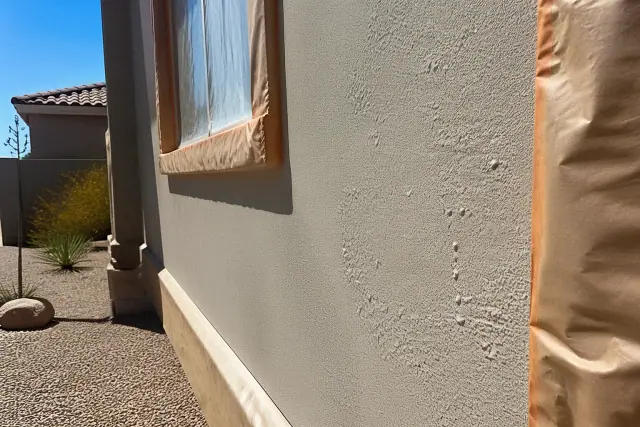
Moisture Blisters on Painted Stucco

Moisture blisters on a painted stucco wall at a Phoenix, AZ worksite with xeriscaped yard in the background.

Blisters and bubbles mark places where moisture pressure may be pushing from behind the coating. The wall base and nearby irrigation, weep screed, and roof flashing deserve attention before repainting.

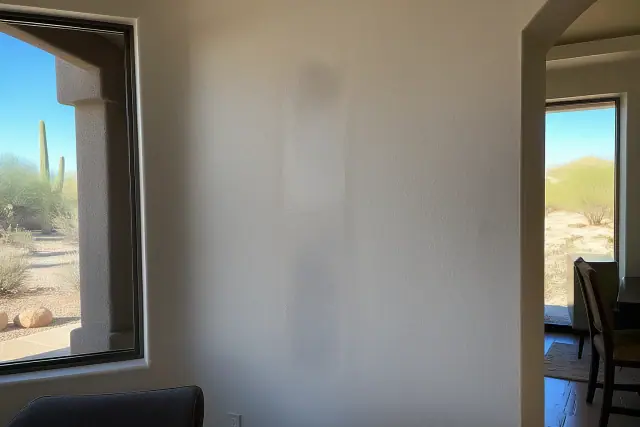
A Patched Crack Showing Picture Framing

Visible sheen mismatch and texture difference on a patched drywall crack in a residential home in Phoenix, AZ.

A visible outline around a patch shows how different texture, porosity, primer, or film thickness can telegraph through the finish. Matching the texture and spot-priming the repair help the full coat wear evenly.

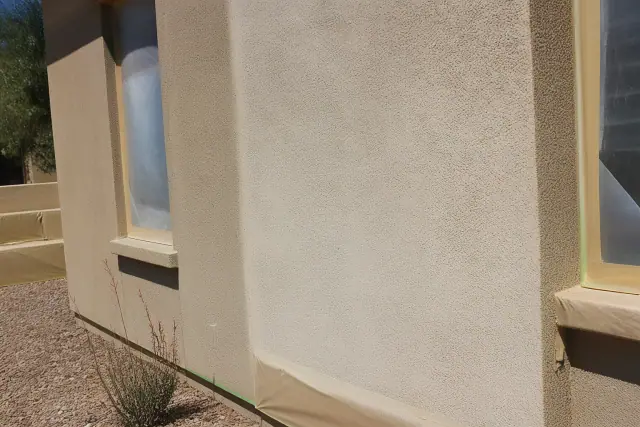
UV Fading on South- and West-Facing Stucco

UV fading on a sun-bleached stucco exterior wall during a construction project in Phoenix, AZ.

Sun-exposed elevations often chalk, fade, and lose color before shaded walls. Uneven sheen can also reveal thin application that will weather faster than properly back-rolled coverage.

Stucco Painting Risk Snapshot

First Check: Wall Moisture

A moisture-meter reading helps distinguish a coating problem from water entering through irrigation spray, flashing, cracks, or blocked drainage. Painting should wait until the source is corrected and the substrate is dry.

New Stucco Needs Full Cure Time

New stucco typically needs 28 days to cure before its first coat. Painting sooner can trap moisture and expose standard paint to the cement's high alkalinity, so an alkali-resistant masonry primer remains important.

Repainting Becomes Ongoing Maintenance

Phoenix homes commonly need repainting every 7 to 10 years, while south- and west-facing walls may need attention closer to 5 to 7 years. Annual checks for hairline cracks, failed caulk, dirt, and pollen help protect the coating's service life.

Bare Integral Color May Be Better

Sound, unpainted stucco with an intact integral color coat can breathe naturally without adding a paint film. After stucco is painted, returning it to bare material generally requires sandblasting or chemical stripping that can damage the scratch and brown coats.

Stucco Painting Decision Table

Match the Symptom to the Real Stucco Risk

What You SeeLikely DownsideWhat to Confirm First
Blisters or bubblesMoisture may be pushing against the paint film from behind.Check the wall, irrigation exposure, weep screed, and roof flashing for an active moisture source.
Peeling or chalky paintWeak adhesion may follow poor cleaning, skipped primer, or a damp substrate.Test for moisture and remove loose or chalky material before choosing a coating.
Cracks returning through paintPaint can hide but will not stop active movement or a wider unrepaired crack.Determine crack width and cause, then complete the appropriate repair before painting.
Uneven sheen or patch outlinesFlashing or picture framing can reveal uneven porosity and film thickness.Confirm repaired areas are texture-matched, spot-primed, and back rolled with the full wall.

The Real Downsides of Painting Stucco

The main drawbacks are moisture entrapment, visible failure when preparation is incomplete, faster UV wear on exposed elevations, and the recurring maintenance created once a coating is added. Damp stucco can blister and peel; unprimed patches can flash or picture-frame; and an active crack can reopen through a fresh finish. In severe, chronically wet conditions, deterioration can extend beyond the coating to the substrate, metal lath, and wood framing.

Conditions That Change the Outcome

Hairline cracks under 1/16 inch can often be bridged by a flexible elastomeric coating, but wider or active cracks need routing and repair before paint. Manufacturer guidance commonly calls for air and surface temperatures between 50 and 90 degrees Fahrenheit, while Phoenix wall surfaces can reach 90 to 100 degrees on summer afternoons; applying in direct sun above 95 degrees increases the chance of poor film formation. Acrylic coatings offer useful color retention, while thicker elastomeric films bridge small cracks but can worsen moisture trapping when a leak remains. Wall orientation, texture depth, primer choice, back rolling, and coating permeability all change the result.

Common Follow-Up Questions

Is it better not to paint? Yes, when bare integral-color stucco is sound, dry, and already performing well; an unresolved leak is also a reason to delay coating. Can old stucco simply be painted over? Only after cleaning, moisture checks, crack repair, removal of loose material, and the right masonry primer. Are breathable alternatives available? Lime wash and mineral silicate coatings allow more vapor movement; lime wash generally needs recoating every 3 to 5 years compared with roughly 7 to 10 years for acrylic. Is elastomeric always safer? No; its thicker film can bridge hairline cracks but may hold moisture when the wall has an active water source.
Ask a Stucco Painter

Unsure Whether Your Stucco Is Ready to Paint?

Share details about cracks, chalking, previous coatings, irrigation exposure, and wall orientation. Phoenix Painter Co. can inspect moisture and substrate condition before recommending repair, primer, or a compatible coating, so the work addresses the wall instead of hiding the problem.